Questions to ask your grandparents before it is too late
A practical list of specific questions to ask your grandparents to capture their real stories, everyday memories, and family history.
Rachel Shiraz · 1 October 2026 · 5 min read
The best questions to ask your grandparents before it is too late are small, specific, and tied to everyday moments rather than broad summaries of their whole lives. Instead of asking what their youth was like, ask what their childhood kitchen smelled like on Sunday morning, who taught them to drive, or what they did with their very first paycheck. Concrete questions open doors that broad questions close.
Why broad questions usually fail
When you ask a grandparent to tell you about their childhood, they almost always give a polite summary. They will tell you that life was simple, that they played outside until dark, or that times were different. The brain cannot easily sift through decades of experience on the spot.
To help them remember, give them a specific anchor. Sensory details, physical objects, and single days work far better than requests for an entire decade. You are not asking for a lecture on history. You are asking them to walk back into a specific room, look around, and tell you what they see.
Questions about childhood and growing up
Start at the beginning. These are the stories that predate your own parents, and they are often the first to disappear if no one writes them down.
- What is the very first bedroom you can clearly picture, and who shared it with you?
- Who was the strict parent, and what was their biggest rule?
- What was a meal your mother made that you loved, and what did the kitchen look like while she cooked it?
- Did you have a secret hiding spot or a favorite place to go when you wanted to be alone?
- What was the biggest trouble you ever got into before you turned twelve?
- What kind of chores did you have to finish before you could go out and play?
- How did your family celebrate your birthday when you were ten?
If you want to preserve these early details alongside old photographs, learning how to write family history can give you a simple structure for organizing what you learn.
Questions about youth, independence, and love
As your grandparents move into their late teens and twenties, they make choices that shape the rest of their lives. This is where you learn who they were before they became parents or grandparents.
- What was your first real job, and what did you buy with your very first paycheck?
- What kind of clothes did you love wearing when you were twenty, even if they look silly now?
- Who was your best friend during those years, and what did the two of you do on Saturday nights?
- Where did you first lay eyes on my grandfather, and what do you remember about that afternoon?
- How did you decide that you were ready to get married?
- What was the hardest surprise about your first year living together?
- What was the first car you ever owned, and did it run reliably?
Questions about raising your parents
Your grandparents raised your parents, which means they saw a side of your family that you never witnessed. These answers often bring honest laughter and helpful perspective.
- What was my mother or father like when they were five years old?
- Were you calm when your first child arrived, or were you quietly terrified?
- What was the tightest financial spot you ever had to manage as a young family?
- What was one habit your kids had that drove you crazy at the time?
- What went through your mind on the day you found out you were going to be a grandparent?
Questions about their own grandparents
This is one of the most powerful areas to explore. When your grandparents talk about their own elders, you reach back into family memories from the early twentieth century or even the late nineteenth century.
- What were your grandparents' names, and did you ever meet them in person?
- What did their voices sound like, and what language did they speak at home?
- What was the oldest family story told around the table when you were young?
- Where did our family live before they moved here, and why did they leave?
Connecting these names to old prints often leads to passing down family photos with clear notes so future generations know who is in each frame.
Questions about hard times and life lessons
Some of the most valuable things an elder can pass down are the truths they learned the hard way. Approach these gently, and never press if they prefer not to speak about a painful time.
- What was the hardest year of your life, and what helped you keep going each day?
- What piece of advice were you given as a young adult that turned out to be completely wrong?
- What is one mistake you made that taught you something you never forgot?
- What do you miss most about the world you grew up in?
- Looking back, what is something you spent years worrying about that never actually mattered?
How to record their answers without making it awkward
Sticking a camera or a microphone directly into someone's face often makes them freeze. Nobody wants to feel like they are auditioning or giving an official testimony.
- Sit down in a quiet room with a cup of tea or coffee, without a TV on in the background.
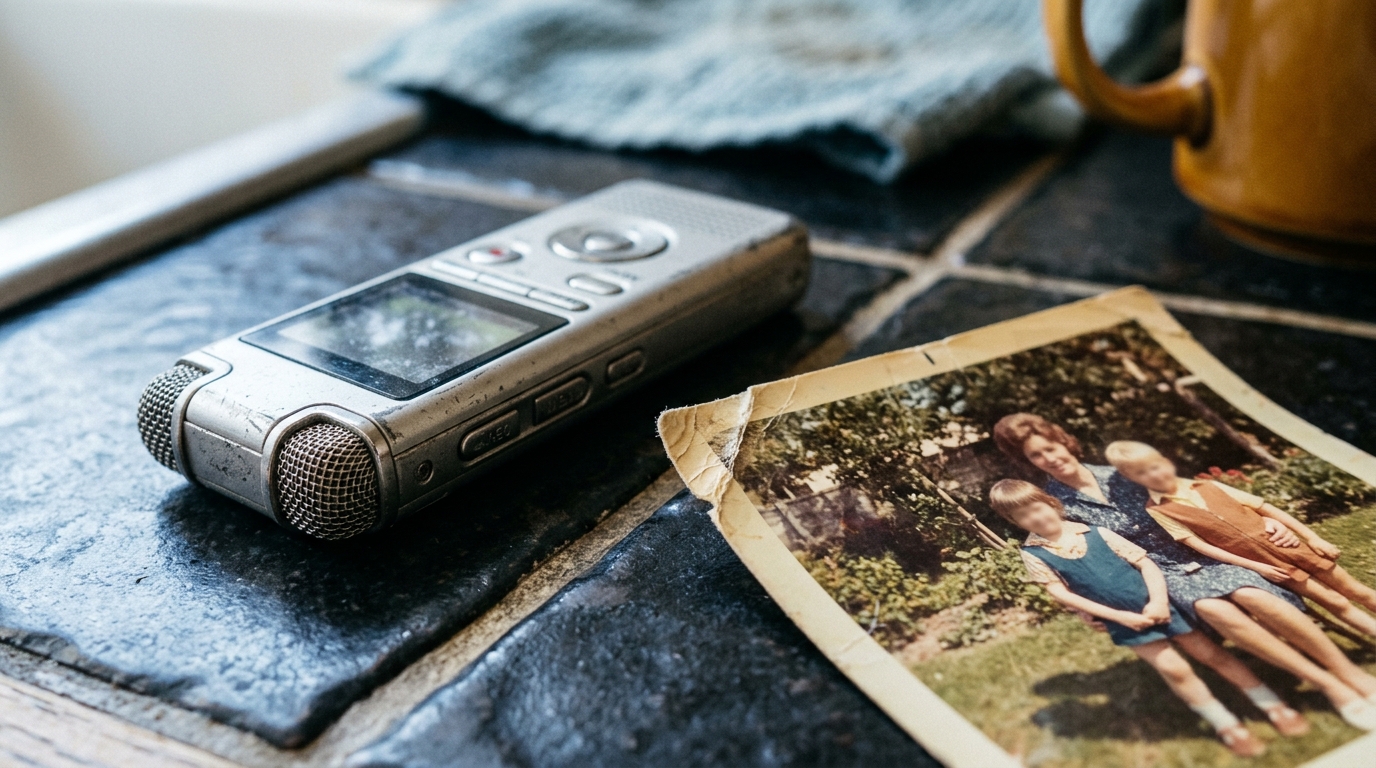
- Open the basic voice recording app on your phone, start the recording, and place the phone screen-down on the table between you.
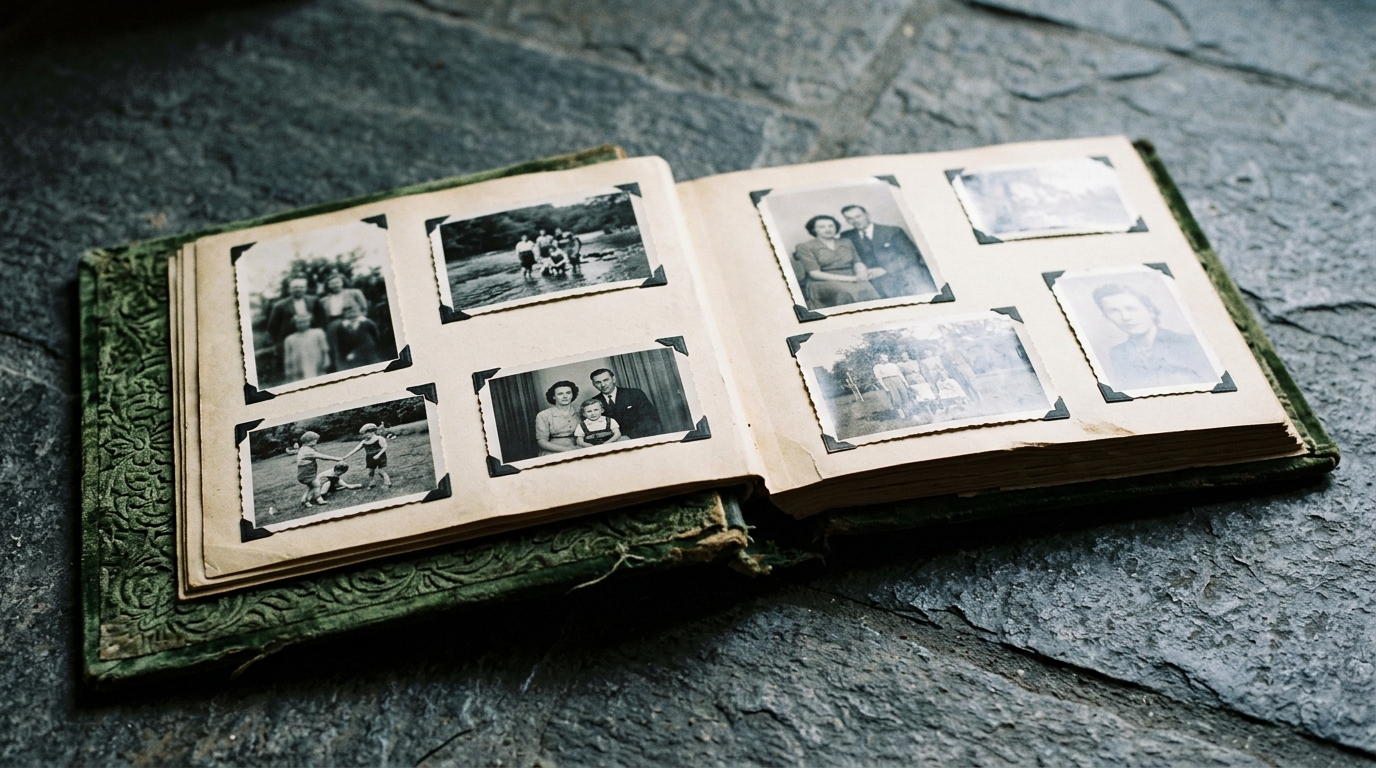
- Pull out an old photo album, an old letter, or a family heirloom to look through together.
- Ask one question and let the silence sit for a few seconds. Give them room to think.
- Follow their tangents. The unplanned detours usually lead to the best stories.
Bringing the memories together
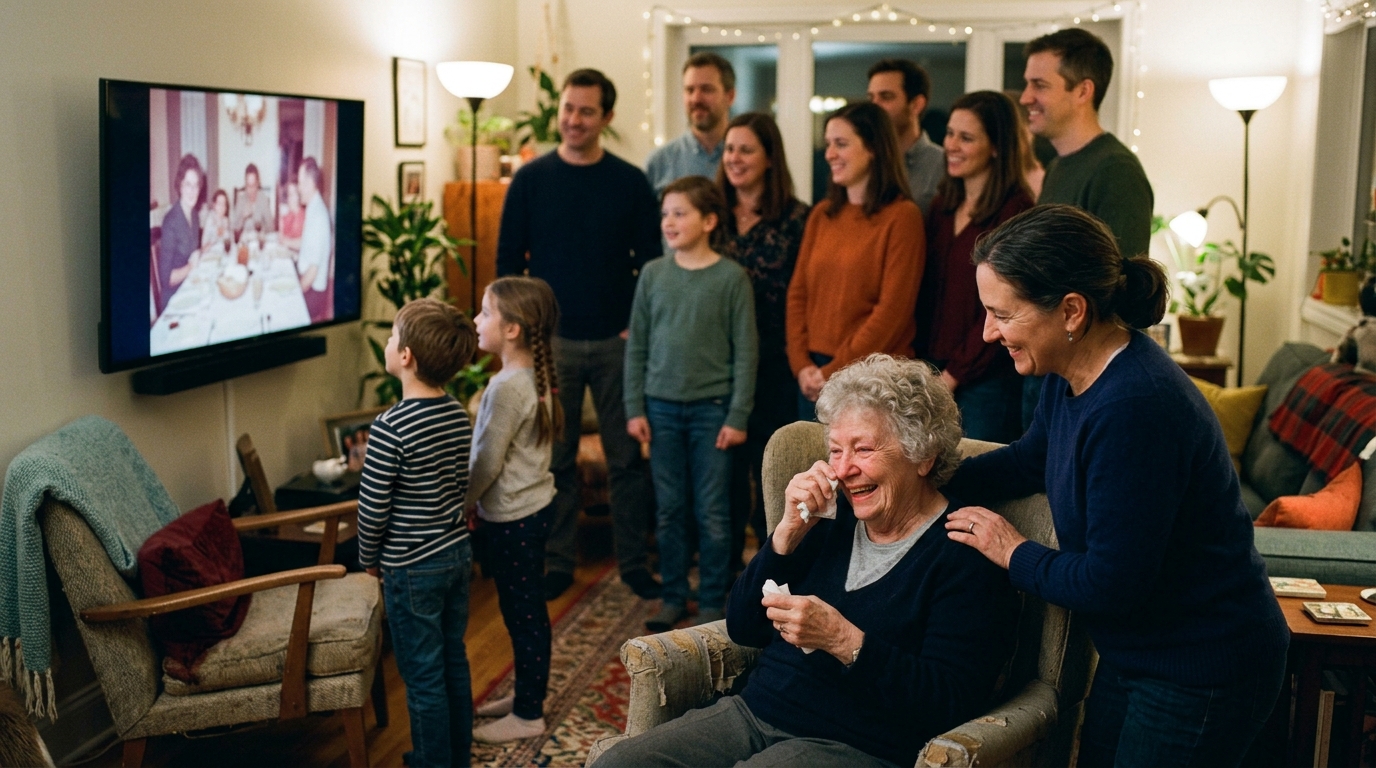
Once you gather these stories, you will likely have a mix of recorded voices, written notes, and older family photographs sitting in drawers. Turning these pieces into a family tribute is one of the most meaningful gifts you can give to your family. Linof can take those old family photographs, repair wear, restore faded color, and create a short moving shot from a still picture to build a finished film with music and titles. You can try it out first, as the first animation is free.
Start with just one question this week
Waiting for a huge family reunion or the ideal quiet afternoon often means the conversation never takes place. Life gets busy, holidays are loud, and time slips away quietly. You do not need an entire afternoon or a full equipment setup. Call your grandparent this week, ask them about the first job they ever had, and simply listen to what they say.
Questions
What should I do if my grandparents say their lives were too ordinary to talk about?
Remind them that you are not looking for historical events, but the everyday texture of their lives. Ask small, specific questions about their childhood kitchen, the games they played, or their first apartment, which immediately validates their lived experience.
Is audio recording better than video recording for an older relative?
Audio is usually much better because people relax when they do not feel watched by a lens. Placing a phone face down on the table keeps the atmosphere natural and prevents self-consciousness.
How long should an interview with a grandparent last?
Keep each conversation between thirty and forty-five minutes so your grandparent does not get physically or mentally fatigued. Having several short, relaxed chats over a few weeks yields richer memories than one long session.
Written by
Rachel Shiraz