How to record your parents' life story
Capture your family history by sitting down and hitting record before the memories fade. Here is how to record your parents' stories simply and comfortably.
Rachel Shiraz · 1 October 2026 · 5 min read
To record your parents' life story, find a quiet room, open the voice recorder app on your smartphone, and sit together for no more than one hour. Start with one specific memory or a single old photograph rather than broad historical questions. The most important step is simply pressing record today instead of waiting for a quiet studio setup that never arrives.
A parent's voice is irreplaceable. We get used to hearing their cadence on regular phone calls, the way they laugh at familiar jokes, or how they pronounce certain words. Capturing that sound while they share their personal history gives your whole family an anchor for generations. It requires very little technical equipment, modest planning, and the patience to let them talk at their own pace.
Choose simple tools that stay out of the way
You do not need an elaborate sound kit or studio microphones. Complex gear often intimidates older relatives and turns an intimate chat into what feels like a deposition. The simplest equipment is usually the most effective.
- Use your smartphone voice memo tool. Built-in microphones on modern mobile phones capture clean, clear voices across a small table. Run a test recording across the kitchen table before you begin to make sure the playback volume sounds natural.
- Switch on airplane mode. Incoming phone calls, notification dings, or vibration buzzes break the rhythm of a delicate memory and can ruin an audio track.
- Keep the device flat on a soft surface. Rest the phone on a fabric placemat, a cloth napkin, or a folded towel. Hard surfaces amplify vibrations when someone sets down a mug or taps on the table.
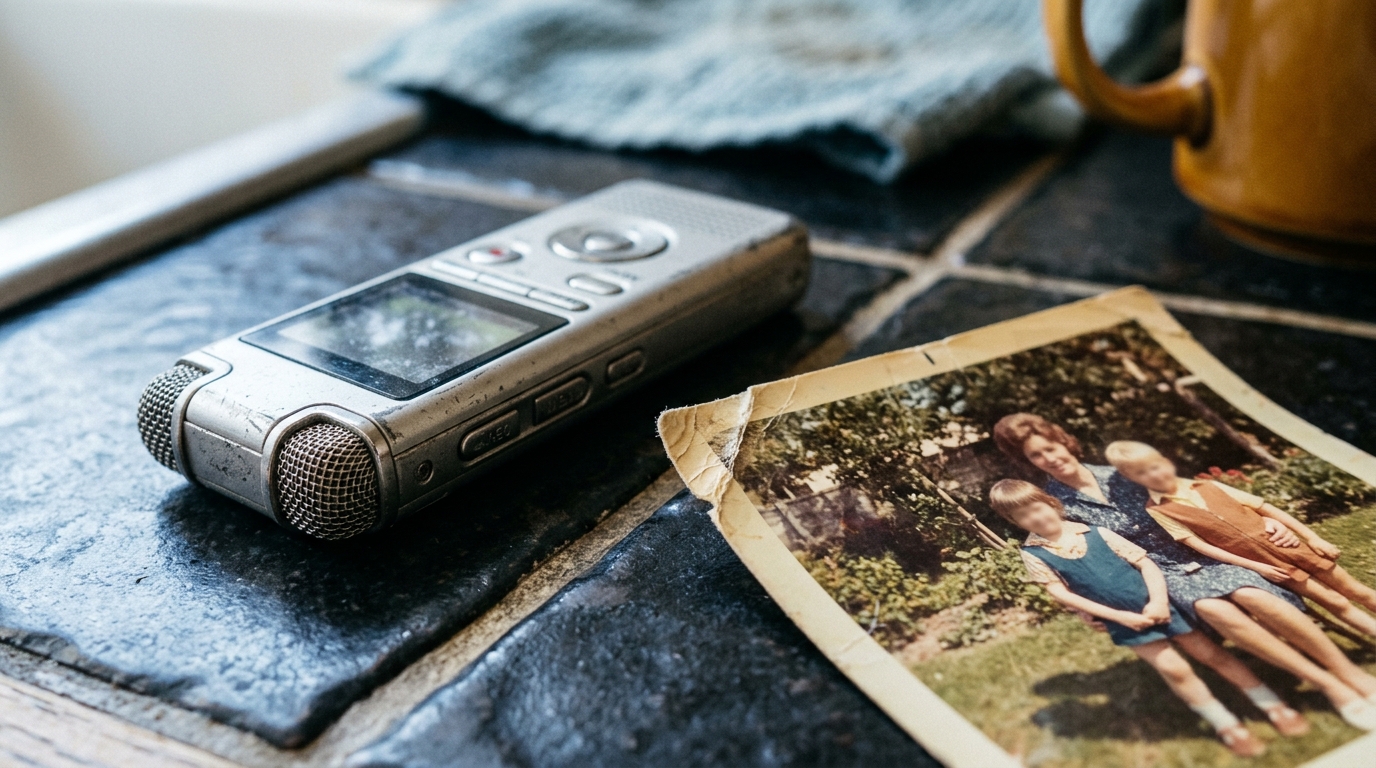
- Consider a dedicated pocket recorder. If a phone feels too tied to work or digital distraction, a small standalone digital recorder with simple physical buttons works cleanly and looks unintimidating.
Use physical objects as memory sparks
Asking someone to recount their entire biography on command is overwhelming. When confronted with broad questions, people often recite the same well-worn anecdotes they repeat at holiday dinners. To reach deeper memories, let physical keepsakes guide the conversation.
Place one item on the table between you. This might be a worn recipe card, a sports medal, an old passport, or a single candid print pulled from a shoebox. Ask them to hold the object and describe who gave it to them, or what they felt on the day it entered their home.
Physical keepsakes bypass the pressure to perform. A parent might freeze if you ask about their childhood neighborhood, but holding an old ceramic mug from a local shop brings back the smell of winter coats, the sound of the diner counter, and the walk to school.
Set up a comfortable room
The environment shapes both the quality of your audio and the honesty of the discussion. Never attempt this in a coffee shop or a busy restaurant. The clatter of cutlery, background music, and espresso machines will clutter the recording and exhaust older listeners.
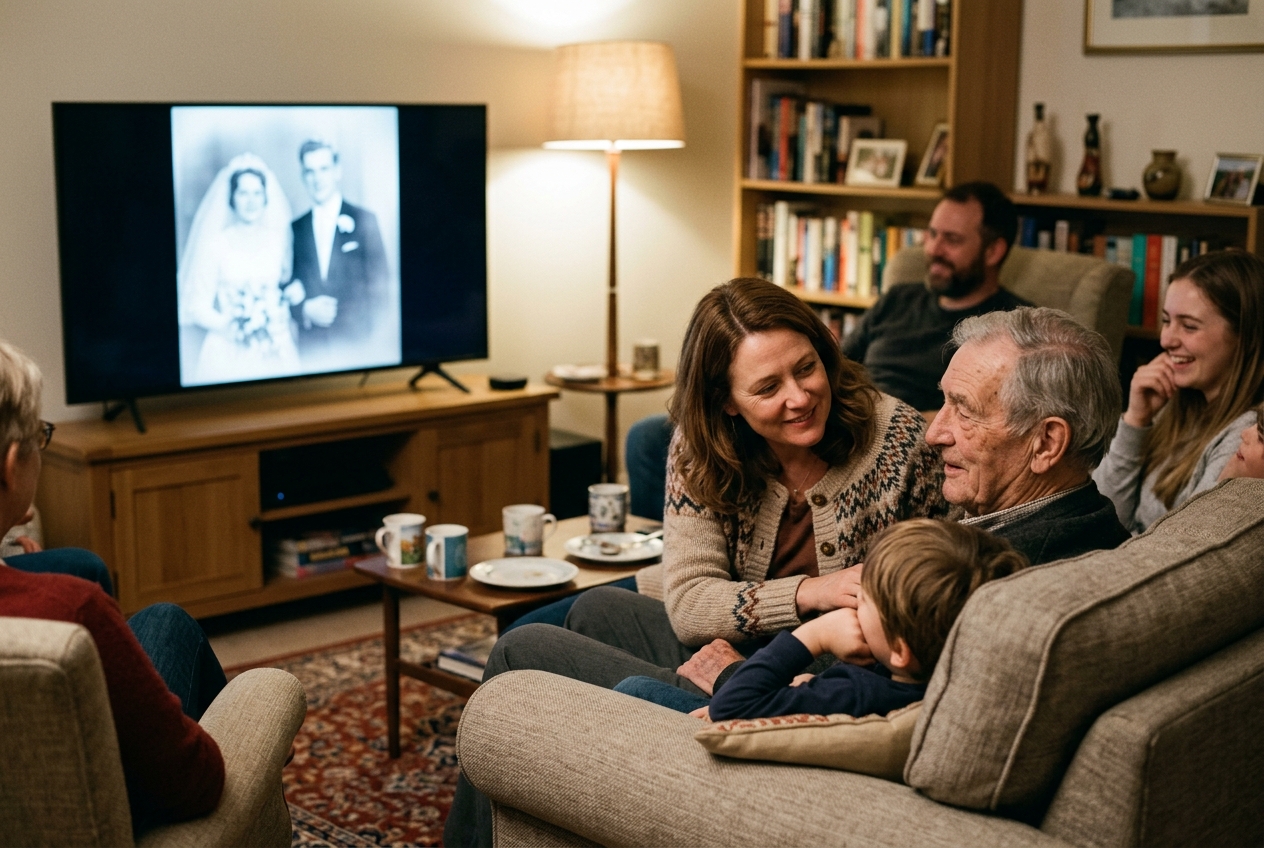
Pick a small room with soft surfaces like rugs, curtains, or upholstered furniture that absorb sound echoes. The kitchen table or a quiet corner of the living room is often the most relaxed spot. Sit beside them or at an angle across the corner of the table. Sitting directly opposite across an empty table can feel like an interrogation. Make tea or coffee, place glasses of water nearby, and position the recorder slightly out of direct eye contact so nobody stares at it.
Ask specific questions and embrace silence
A list of ten to fifteen questions is plenty for one sitting. You might only get through two or three, which is completely fine. If you want ideas on how to build a thoughtful question list, explore interview your parents questions to spark conversation.
Focus on sensory details rather than chronological timelines:
- Ask about the sounds and smells of their childhood home.
- Ask about their first job and what they bought with their first paycheck.
- Ask what their daily routine felt like during their twenties.
- Ask what made them laugh the hardest during difficult years.
When they finish an answer, pause before asking the next question. Count to four in your head. Silence creates space. People often add their most honest, vulnerable reflections right after a thoughtful pause, once they realize you are not in a rush.
Respect the natural limits of memory
Memory is personal and subjective. Your parents will misremember dates, scramble the names of minor acquaintances, and confuse details from different trips. Never correct them or turn the interview into an examination of facts. You are capturing their personal experience, not compiling an academic archive.
Keep an eye on their energy. Sharing personal memories takes real physical stamina and emotional energy. End the conversation after forty-five to sixty minutes, even if the stories are flowing well. It is far better to hold three short sessions over several weeks than one exhausting afternoon.
Back up your recordings immediately
The moment you stop recording, save the file in multiple safe places. Phones get dropped, lost, or reset unexpectedly, and an uncopied voice memo can vanish in an instant.
Save a copy to your computer, upload one to secure cloud storage, and email a duplicate to yourself or a sibling. Following good habits for preserving family memories means keeping copies in more than one location so an accidental deletion never destroys the file. If you also have older analog recordings around the house, learning how to restore old audio recordings can help protect earlier tapes before they degrade.
Turning recordings into family keepsakes
Once you record your parents' voices, you will likely discover albums, loose prints, and old tapes that match the moments they described. Those voices help you understand which pictures matter most. If you want to celebrate an upcoming milestone, you can bring these memories together into a meaningful family tribute for a birthday, anniversary, or gathering. Linof turns your family photos and home video clips into a short film with music and moving moments, and your first photo animation is free.
Press the record button this week
The biggest barrier to recording a parent is waiting for a better time. We tell ourselves we will do it over summer break, after the holidays, or when we have a better microphone. Meanwhile, years pass by.
Do not worry about the hum of the refrigerator or an imperfect sentence. Decades from now, the faint sound of your parent clearing their throat at the table will be deeply comforting. Pick an afternoon this week, bring a warm drink, sit down together, and press record.
Questions
What app should I use to record my parents' stories?
The built-in voice memo app on your smartphone works well for family interviews. Turn on airplane mode so incoming calls do not interrupt, and keep the phone resting on a soft cloth to avoid table vibration.
How long should a parent interview session last?
Limit each session to forty-five minutes or an hour. Recalling decades of memories takes considerable energy, so doing several short sessions keeps your parents refreshed and engaged.
What should I do if my parents give short answers?
Show them a physical object like an old photograph, a piece of jewelry, or a recipe card to prompt sensory memories. After they give a brief reply, stay quiet for a few seconds to give them room to add more thoughts.
Written by
Rachel Shiraz