The questions to ask your parents while you still can
The best time to ask your parents about their lives is a quiet afternoon before the stories slip away. Here are the exact questions to ask and how to help them open up.
Rachel Shiraz · 1 October 2026 · 5 min read

The questions to ask your parents while you still can are concrete, small, and grounded in physical routines rather than broad summaries of life. Start by asking about the exact layout of their childhood home, their daily habits with their own parents, and the turning points of their twenties. Do not wait for a formal family milestone to begin listening.
How to start without making it heavy
One common mistake when capturing family memories is turning a casual talk into a formal interview. If you sit your mother down under bright lights and ask her to explain her entire life, she may tense up. The expectation to produce a structured, profound narrative can silence anyone.
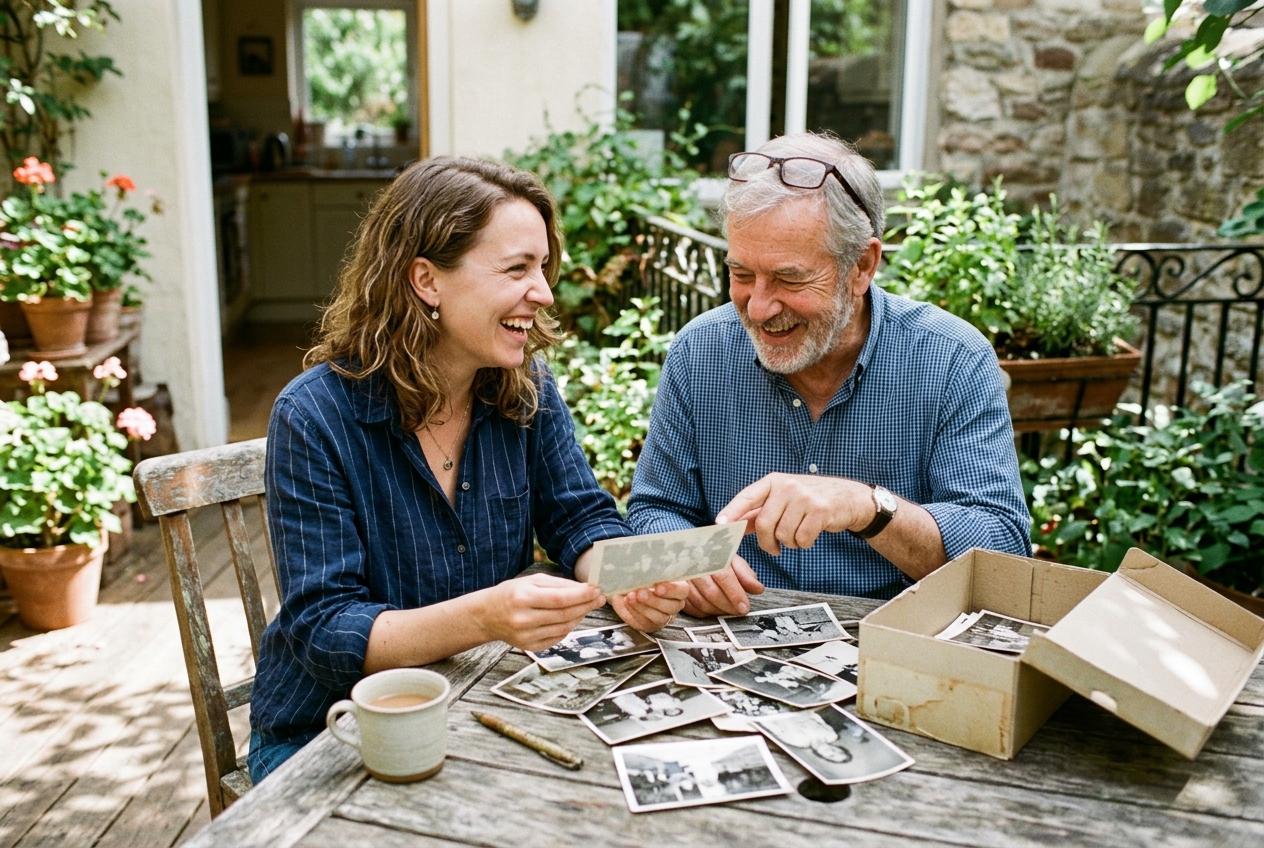
Instead, lower the pressure by bringing out an object. A box of loose family snapshots or an old paper album works well. People speak much more freely when their hands are busy and their eyes rest on a photo rather than a lens. When your father looks at a faded print of a road trip, he does not feel the burden of recording history. He simply remembers the old station wagon, the smell of rain on the vinyl seats, and how the exhaust pipe rattled.
Begin with the tangible background details. Ask about the wallpaper pattern, the pet that kept escaping, or the car parked in the driveway. These mundane anchors open memory far more reliably than broad questions about feelings.
Questions about childhood and daily routines
It is easy to forget that your parents were once children with strict bedtimes, schoolyard rivalries, and quiet hiding places. To reach those memories, ask about their physical environment.
- Describe the kitchen in the house where you grew up. What did Sunday mornings smell like?
- What was the house rule you broke most often, and did anyone catch you?
- Who was the neighbor you were told to stay away from, and what was the reason?
- What route did you walk to school, and what stores did you pass along the way?
- What did an ordinary weekday dinner look like when you were ten years old, and where did everyone sit?
- What was the biggest mess or trouble you got into before turning twelve?
These concrete questions about setting and routine lead naturally into deeper memories. They show how money was handled, how rules were enforced, and how the household felt day to day.
Questions about the people who raised them
Your grandparents may seem like distant figures in framed portraits, but to your parents, they were simply ordinary, imperfect adults. Hearing your mother or father speak about them honestly provides a clear perspective on your roots, which is invaluable if you plan to record a parent's life story or write down family lore.
- What was the worst advice your mother ever gave you?
- Which habit from your father did you swear you would avoid, only to catch yourself doing it later?
- Who was the strict parent, and who gave in when you asked twice?
- What did your parents argue about behind closed doors?
- What exact trade or job did your parents work when you were in elementary school?
- What was a sacrifice your parents made that you only recognized once you became an adult?
Collect the simple facts as well. Ask for full maiden names, the specific towns where family members were born, and the names of distant cousins who appear in old albums. These details often vanish unless someone writes them down.
Questions about their twenties and unexpected choices
Many families only repeat the polished, rehearsed version of how two partners met or how an adult picked a career. Your goal is to hear the unfiltered, real moments.
- What was the worst job you took in your early twenties, and what made you leave it?
- Who was your closest friend when you were twenty-five, and how did life pull you apart?
- When you met my other parent, what was your honest first impression on that first date?
- What was the first real disagreement the two of you had to settle together?
- What was a path you almost took: a job offer you declined, a city you almost moved to, or a relationship that ended?
Learning about their alternate paths reveals who your parents were before you entered the picture. It replaces the role of parent with the full reality of a young adult finding their footing.
Anchoring photos in time
When a parent struggles to remember when an event happened, avoid asking for the exact calendar year right away. The pressure to recall dates can stall a great story.
Instead, hold up the photo and ask about the surroundings. What car were they driving? Where were they living that winter? How old was the dog lying on the porch rug? By piecing together these practical clues, they can usually pinpoint the year without frustration. If you are preparing photos to make a family tribute film for an upcoming gathering, noting these details lightly on the back of prints will save hours of confusion later.
How to capture the audio
Preserve the sound of their voice while you listen. Taking rapid notes on a pad breaks eye contact and interrupts natural storytelling, while holding a camera in their face can cause hesitation.
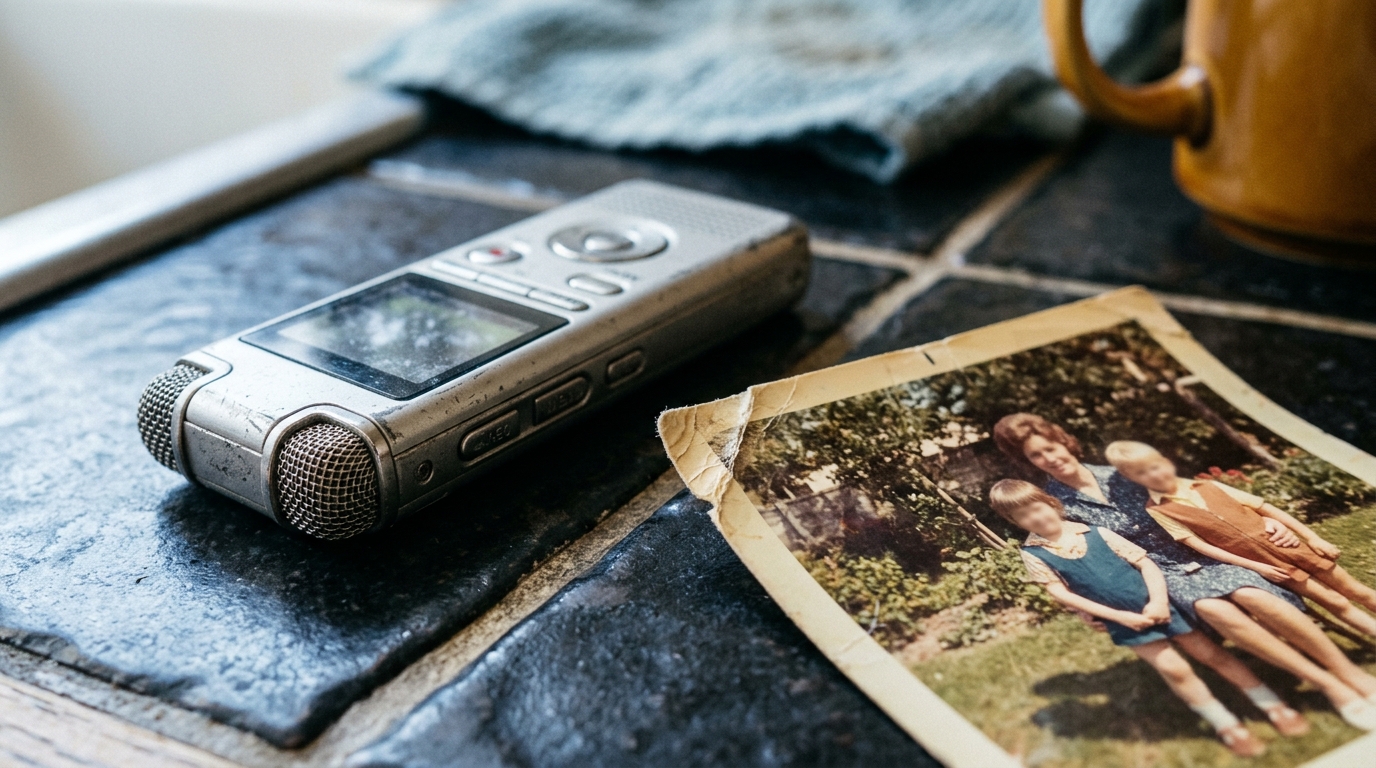
Use the voice recording app on your phone. Lay the phone face down on the table between your coffee mugs so the screen stays dark and out of mind, then let it record quietly throughout your visit. For an older relative who prefers simple conversation, a quiet room without background television makes a clear recording you can revisit for decades.
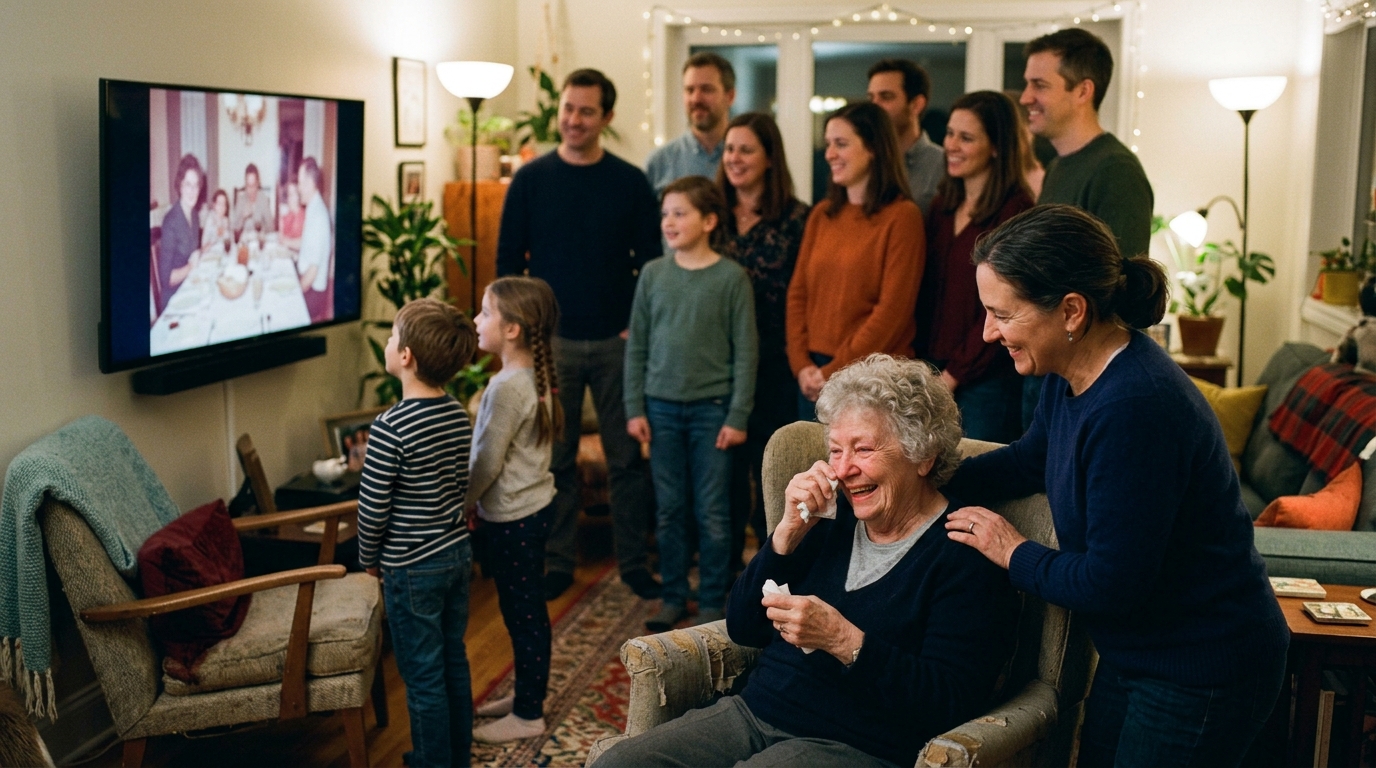
When you gather these memories alongside boxes of old prints and home video clips, bringing them together gives the whole family a chance to experience the history. Linof turns a family's old photos and videos into a short film with music and titles, repairing old pictures and animating them into short moving shots, and the first animation is free so you can see it before paying. That way, the stories your parents share do not sit unseen on a phone drive.
What to do if they brush off the questions
Some parents are private by habit. If you ask a broad question about their inner emotions, they might shrug or give a short answer. Forcing the topic rarely helps.
Instead, ask about practical skills. Ask how your mother prepares a traditional dish step by step, or ask your father how he maintained an old lawnmower. People who hesitate to discuss personal feelings are often glad to explain how things work. Once they start talking through a physical skill or family recipe, personal stories and recollections about relatives usually follow on their own.
Do not wait for a major milestone or a sudden health scare to begin. Set your phone down, pour a warm drink, and ask your parent what their first bedroom looked like.
Questions
What is the best way to get parents to talk about their childhood?
Start with small, physical details instead of asking for their life story all at once. Hand them an old family photograph and ask about the car in the driveway, the house rules, or what Sunday dinner smelled like.
Should I record my parents using audio or video?
Audio is usually better because it feels less intrusive. Placing a phone face down on the table allows your parents to relax and speak naturally without feeling watched by a camera lens.
What should I do if my parents get dates or facts wrong?
Let the mistake pass without interrupting the story. Your goal during the conversation is to capture their emotional experience, not to conduct a factual audit that might make them defensive.
Written by
Rachel Shiraz