Saving the family recipes before they go with the cook
Family dishes live in hands, not on index cards. Here is how to shadow the family cook, record exact measurements, and save the stories behind the food.
Rachel Shiraz · 1 October 2026 · 4 min read
To save a family recipe before it disappears, you have to stand in the kitchen while it is being made. Written cards often leave out the real steps, because the true dish lives in muscle memory and touch. You save the food by shadowing the cook, weighing the handfuls, and recording the stories spoken across the stove.
Why written recipe cards leave you stranded
Most family recipe boxes contain puzzles rather than instructions. A yellowed index card might list four ingredients and a note to bake until done. Another might say to add water until the dough feels right, or to season to taste.
These cards were never meant for a beginner. They were memory triggers for someone who had already cooked the meal fifty times. The person writing the note knew the sound of the oil when it reached the right temperature. They knew the exact resistance of the pastry under their fingers. When you try to recreate that meal using only the faded card, the final taste is almost never the same. The real recipe is the cook, not the paper.
How to shadow the cook
Set aside an afternoon just for this dish. Buy every ingredient yourself ahead of time so the cook does not feel rushed. Your only job during this session is to observe and document.
- Bring a kitchen scale and measuring spoons.
- Keep your phone charged for short video clips.
- Stay out of the actual cooking so you do not miss a step.
When the cook reaches into a canister for a handful of flour, ask them to pause. Place a bowl on your scale, zero the reading, and ask them to drop that handful into the bowl. Note the weight in grams, then tip it into their pot. Do the same with pinches of salt, glugs of oil, and splashes of broth. This turns vague gestures into reliable numbers without interrupting the cook's natural rhythm.
Use your phone camera for moments that words cannot describe. Record five seconds of the simmering sauce so you have the bubbling speed on video. Record the color of the roux before the stock goes in. Record the way their fingers fold the dumpling wrapper. These short clips answer every question you will have later when you stand alone at your own stove.
Kitchen stories and context
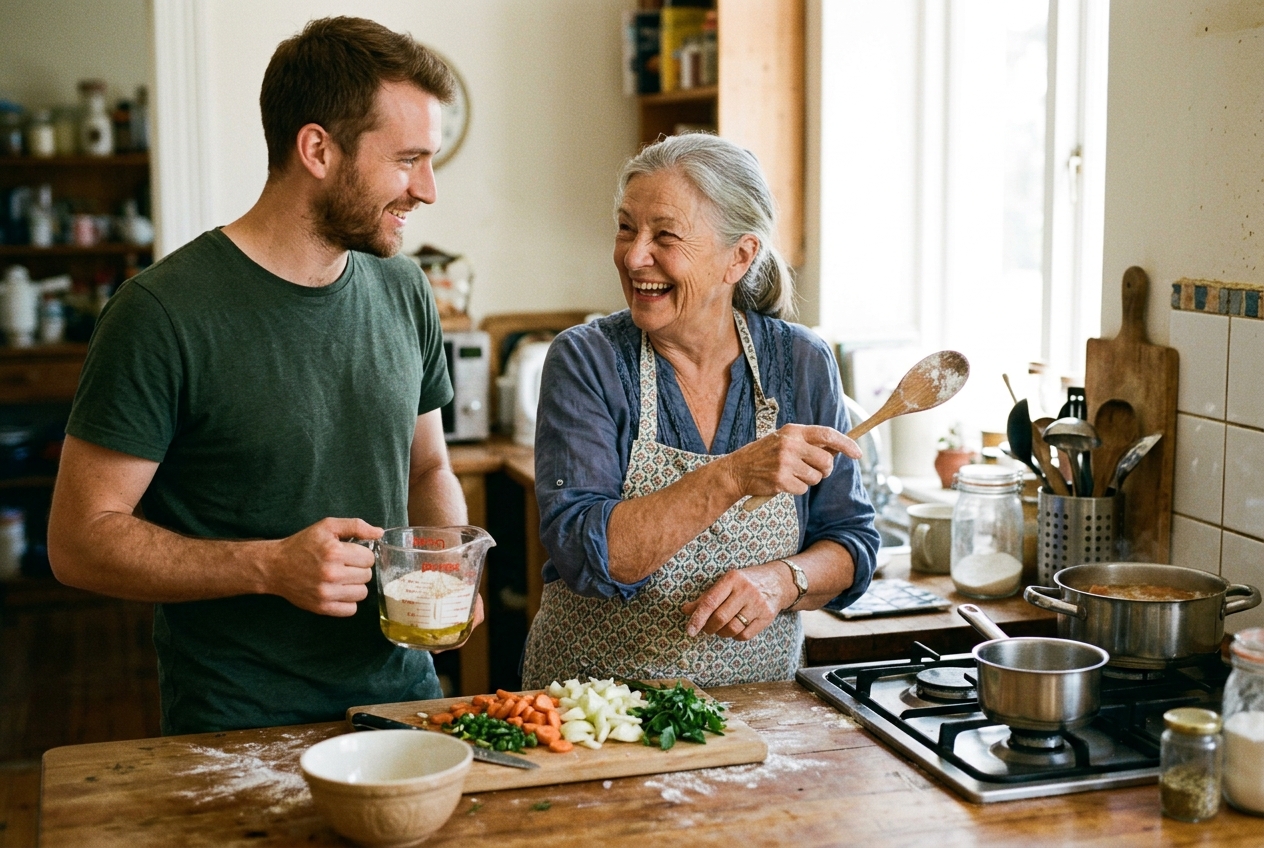
People speak freely when their hands are occupied. While dough rests or broth simmers, ask about the background of the meal. You can treat this time much like an informal session to interview your parents about their lives.
Ask who taught them to cook the dish. Was it something they ate growing up, or did they learn it out of necessity when money was tight? Did the recipe change after moving to a new neighborhood? Often the strangest ingredient turns out to have a history, like a wartime substitution that simply became the family habit. When you record these explanations, you preserve the identity of the dish alongside the steps.
Tools, pans, and ingredients that change
Recreating an old recipe often fails because kitchen gear has changed. A heavy, seasoned cast iron skillet holds heat differently than a modern nonstick pan. Even basic staple items, such as regional flour brands or canned tomatoes, vary widely in acidity and moisture.
Take note of the specific pots and utensils the cook chooses. If they reach for a specific bent aluminum spoon to cream butter and sugar, take a picture of it. If they swear by one particular brand of yeast or soy sauce, write down the name. These small physical details explain why the dish worked for them every time.
Preserving the physical cards
The handwritten cards, splattered binders, and notebook pages still matter deeply. The handwriting, watermarks, and worn edges carry personal history. Treat them with the same attention you give when you preserve family memories in albums.
Scan both sides of every card using a flatbed scanner or a dedicated scanning app on your phone. Back up the digital scans in two places. Store the original paper cards in archival sleeves, away from kitchen moisture and grease. When you cook, use a printed copy on your counter so the original remains clean and safe.
Making something lasting from the footage
After a few sessions, you will have scanned cards, audio notes, and video clips of hands at work. These pieces often end up forgotten inside phone storage. Bringing them together into a short tribute film gives your whole family a way to revisit those kitchen afternoons together.
Linof turns family photos and home video clips into a short film with music and clear titles, and the first animation is free so you can see a restored photo come alive before deciding on the rest. It gives you an easy way to build a lasting family tribute for an upcoming holiday or milestone dinner.
The final step: cook the test batch
The only true test of your notes is cooking the dish yourself while the original cook is there to taste it. Do not wait months to try this. Within two weeks of your shadowing session, invite them over to your kitchen.
Make the meal entirely on your own. Keep your recorded clips nearby to check textures. Hand the cook a spoon before you serve the plates. They will tell you immediately if the texture is accurate, if the sauce needs more acidity, or if you got it right. Once you pass that taste test, the recipe belongs to the next generation, safe from being lost.
Questions
What is the best way to record family recipes without exact measurements?
Stand beside the cook with a digital kitchen scale and measuring cups. Ask them to place each handful, pinch, or pour into your measuring container before adding it to the pot, then record the exact weight in grams.
How do you protect old handwritten recipe cards from kitchen damage?
Scan the front and back of each card at high resolution to keep digital backups. Store the original paper cards in acid-free archival sleeves away from stove heat, and only use printed copies while cooking.
Why does a family recipe taste different when someone else makes it?
Written cards usually leave out cooking heat, pan materials, and sensory checks like dough elasticity or sauce color. Ingredients like flour and canned goods also differ between brands, changing the final flavor.
Written by
Rachel Shiraz