How to write a simple family history
A practical guide to writing down your family's stories without getting lost in endless research or giant family trees.
Rachel Shiraz · 1 October 2026 · 6 min read
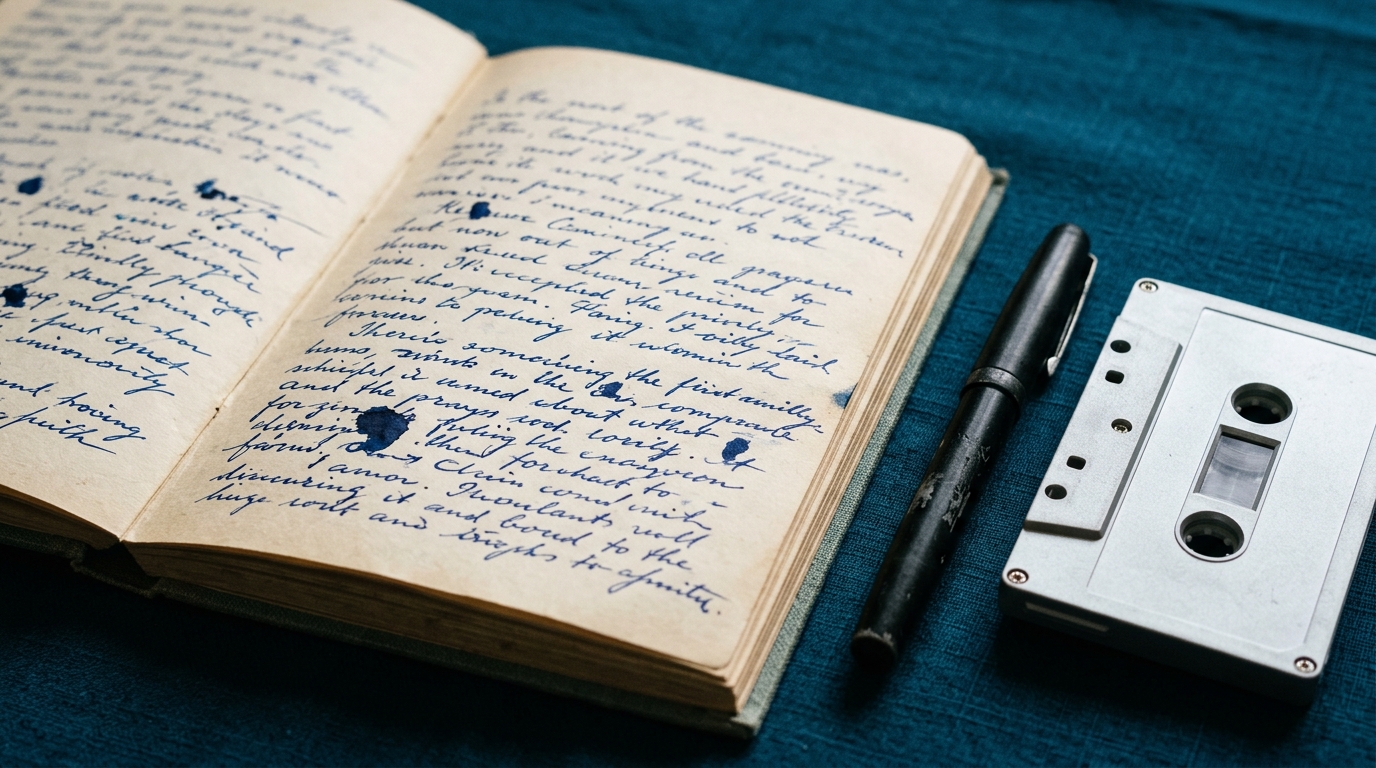
To write a simple family history, pick one person, one event, or one era rather than trying to chronicle generations. Write down the stories you already know first, using the same words you would use across a dinner table. Your goal is to capture personality, voice, and lived experiences, not an encyclopedia of birth dates and hometowns.
Most people who want to record their family's past get stuck before they finish a single chapter. They think they need to trace a lineage back to the seventeenth century or produce a three-hundred-page book. You do not need months of free time or archival research to give your relatives something meaningful. A short, honest account of a few real moments is what people cherish.
Skip the family tree trap
When people decide to document their past, they often start by hunting down records. They spend evenings searching for census pages, ship passenger lists, and marriage certificates.
While a date on an official record is neat to know, it never reveals what your grandfather's laugh sounded like. It does not explain why he kept loose peppermint candies in his coat pocket, or how he reacted when his first car broke down in the rain.
Research can become an easy excuse to delay writing. You can spend years trying to locate a missing town record overseas. While you search, the older people who remember the living details grow older. Start with the memories you hold right now. You can check spelling and calendar years later.
Choose a single thread
The fastest way to finish a family history is to narrow your focus. Trying to write about four grandparents, eight great-grandparents, and a dozen cousins all at once leads to exhaustion.
Pick one storyline and follow it through:
- The early days of a family kitchen or corner business
- How your parents met and settled in their first apartment
- The history of one object passed down through several households
- A single summer that altered where your family lived
When you restrict your project to one thread, the work becomes clear. You know which questions to ask and which old papers to look through. When you finish one piece, you can hand it to your family right away. A collection of three-page stories is far more enjoyable to read than a heavy binder full of names and dates.
Look at physical objects for clues
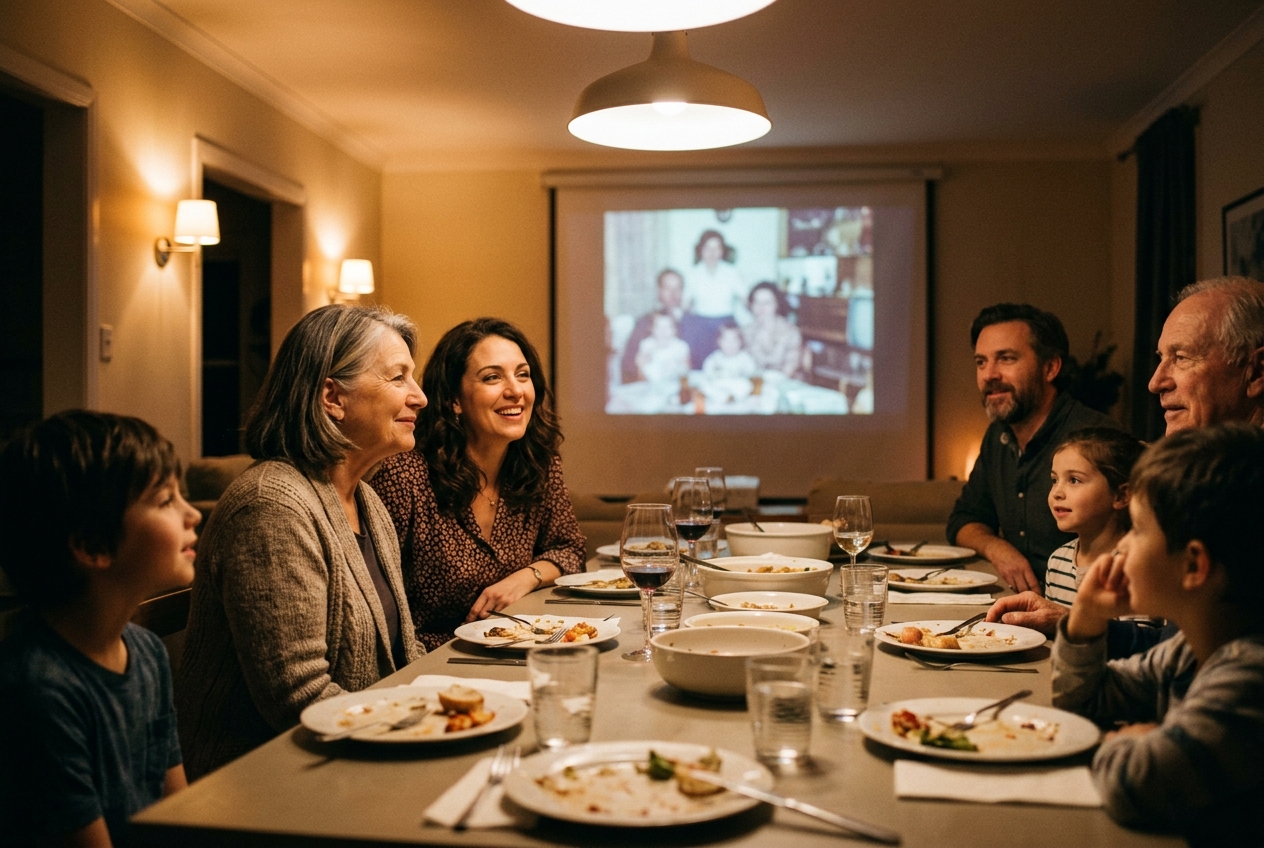
Before writing, look around your home for physical items that hold memory. A handwritten recipe card with butter stains, an old brass key, a concert stub, or a worn coat can bring back forgotten moments.
Photographs and home movies are especially helpful. If you have an album or an envelope of prints, look closely at the backgrounds. Notice the shape of the television set, the linoleum pattern in the kitchen, or the car parked at the curb. These background items place your story in a real place.
If you have older tapes or reels in storage, watching them will give you sensory details you could never invent. If you are sorting through old boxes, take time to see what to do with old home videos before tape degradation sets in. Seeing how someone moved their hands or tilted their head adds truth to the written page.
How to ask questions that work
If you have older relatives you can speak with, set aside time for a quiet conversation. Asking someone to summarize their entire life usually leads to silence. Broad prompts feel like a test.
Instead, ask about specific physical objects, everyday routines, and concrete choices:
- What was the first meal you learned to cook on your own?
- What did the bedroom you shared with your siblings look like?
- How did you get to school on winter mornings?
- What was your first job, and what did you buy with your first paycheck?
- Who was your closest neighbor, and what did their house smell like?
Keep the setting casual. Sit at a kitchen table with tea or coffee. Use the voice memo feature on your phone so you do not have to scribble notes while they speak. If you need more ideas, browse these questions to ask grandparents before you sit down. Let them take tangents. The unplanned detour is often where the funniest, most honest details live.
Turn facts into scenes
A collection of facts reads like a government document. A family history works best when it reads like a scene.
Consider the difference between these two versions:
- A fact: My grandparents married in January 1978 during a snowstorm.
- A scene: My grandparents got married on a Friday morning during a blizzard. The delivery van got stuck in a snowdrift three blocks away, so the wedding guests ate corned beef sandwiches from the deli down the street while drying their socks on the radiator.
You do not need to make anything up. You only need to ask what the room felt like, what the weather was doing, and what people were wearing. Those small details help a younger reader picture what it was like to stand in that room.
What to do with conflicting memories
As soon as you ask two siblings about the same childhood event, their stories will disagree. One will claim the family station wagon was dark blue, while the other remembers green paint. One will swear an uncle arrived late to a wedding, while the other insists he never showed up at all.
Do not worry about solving every contradiction. Human memory changes with time. You are writing down the feeling of a family, not presenting evidence in a courtroom.
Write down both versions and let them sit side by side. You can write: "Depending on whether you ask my mother or my aunt, the car was either dark blue or olive green, but both agree the heater stopped working before they reached the mountains." Disagreements like this show real character and bring warmth to the page.
Share the story while people can enjoy it
Do not hide your writing away until it feels finished. Print a few pages and bring them to a birthday, an anniversary, or a weekend dinner.
If you are planning an event for a parent or grandparent, you can pair your written words with moving pictures. Linof helps you turn family photos and home video clips into a short film with music and titles, and the first animation is free so you can see a photo move before you decide anything. A short video shared alongside a printed story gives relatives of all ages an easy way to connect with the past.
For a major celebration, you can also review this guide to making a wedding anniversary film to help organize your visual materials alongside your written notes.
Let your own voice stay in the writing
Do not try to sound formal or literary. If you talk with casual phrases or regional words, leave them on the page. Your children and grandchildren want to hear your voice, not an imitation of a history book.
Write your first draft quickly without editing. If you pause to fix punctuation or second-guess your vocabulary, you will lose momentum. A simple, imperfect collection of three family stories in a desk drawer is a treasure to the next generation. A polished book that never leaves your thoughts helps no one. Pick one story today, sit down, and write the first sentence.
Questions
How long should a simple family history be?
A simple family history can be as short as three to five pages focusing on a single story or person. You do not need to write a full book to create something meaningful for your family. A short, focused account is much more likely to be read and shared.
What questions should I ask an older relative for a family history?
Ask narrow questions about daily habits, specific objects, and sensory details rather than broad questions about their whole life. Inquire about their first job, their childhood bedroom, or a favorite family meal. Concrete prompts make it much easier for relatives to recall clear memories.
How do I handle family members who remember events differently?
Include both versions of the story directly in your text instead of trying to decide who is right. Acknowledging that two siblings recall the same event in opposite ways adds humor, honesty, and charm to the narrative. You are recording family memories, not writing a legal transcript.
Written by
Rachel Shiraz