Why do VHS tapes look bad, and what can be fixed
VHS tapes look soft and noisy because they were built for small tube screens, and magnetic tape degrades over time. Here is what you can clean up, and what stays as it was.
Dan Warner · 1 October 2026 · 6 min read
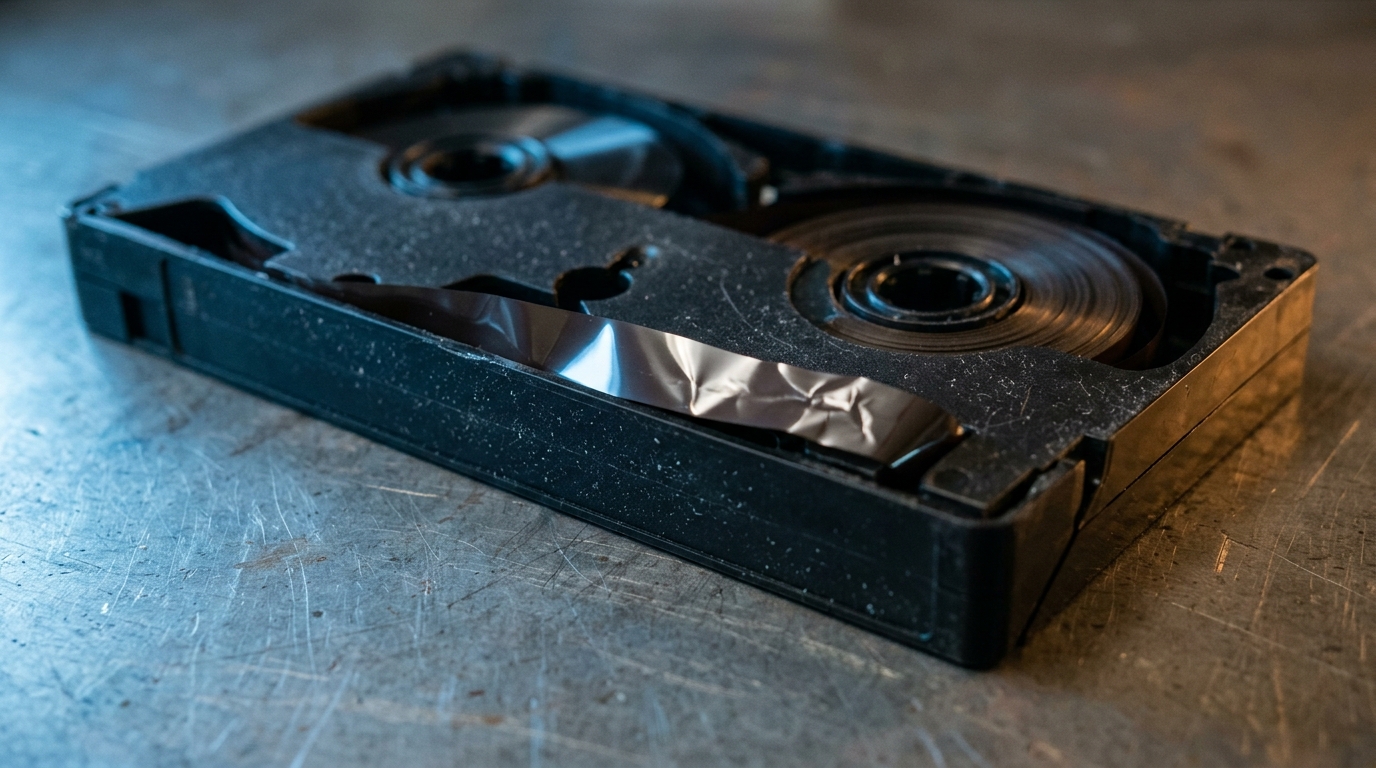
VHS tapes look soft, noisy, and washed out because they were recorded with very low visual detail for small tube televisions, and the magnetic material physically decays over time. When you play that tape on a wide, bright modern display, the screen stretches each weak scan line and shows every tracking flicker in sharp relief. Some of that visual fuzz can be cleaned up during capture and digital editing, but physical limits remain.
Watching a tape from thirty years ago is often surprising. In your mind, your tenth birthday party or your grandparents walking down the street feels bright and vivid. On screen, the colors bleed across the frame, faces look soft, and a persistent hum sits under the voices. The tape might not even be broken. It simply behaves the way consumer video behaved decades ago.
Why VHS looks worse than you remember
The gap between your memory and the tape comes down to two things: how little information the camera captured, and how modern televisions handle analog signals.
Analog scan lines on digital pixel grids
Old home video did not use pixels. A standard tape recorded video across alternating horizontal lines. By modern standards, that amounts to roughly two hundred and forty visible lines of horizontal information. When you put that signal onto a modern flat display with thousands of pixel rows, your screen has to invent information to fill the empty space. It stretches those soft lines, turning slight analog blur into large, blocky patches.
The forgiving glow of old tube screens
The heavy glass tube television you watched in childhood was naturally forgiving. Its electron beam scanned across glowing phosphor dots that physically bled into one another. That gentle glow hid analog static, smoothed rough camera movement, and blended harsh grain. A modern screen has no glow. It is an exact, unforgiving grid of crisp pixels that shows every flaw, every tracking wave, and every dropout with total clarity.
How tape degrades in the box
Even if a cassette sat untouched in a cool closet, the physical chemistry of the medium changes over time. Magnetic tape is made of three layers: a plastic base film, a binder chemical, and tiny magnetic particles that hold your recorded images and sound.
Several physical changes happen as the decades pass:
- Weakening magnetic charges: The magnetic signal stored in the particles slowly fades. The picture loses its contrast, black tones turn into washed-out gray, and bright colors lose their punch.
- Binder breakdown: In warm or humid environments, the binder attracts moisture. The coating becomes sticky, making the tape drag against playback rollers or shed particles onto the playback heads. If you want to know more about keeping your collection stable, our guide on how to store old vhs tapes covers basic storage care.
- Mechanical warping: The plastic casing twists slightly, or the thin ribbon stretches. That uneven tension causes the tape to ride crooked across the rotating heads, creating jittering static bars along the lower third of your screen.
If you want to read deeper into the chemical life of tape, you can check our piece on do vhs tapes degrade.

Getting a clean transfer before you edit
Restoration begins with playback. You cannot repair visual damage on a computer if your capture hardware mangled the original signal. A five-dollar USB capture stick plugged into an old, gummed-up player will add digital stutter and compression artifacts to an already delicate recording.
If you plan to transfer home recordings yourself, use a reliable player with an S-video connection. An S-video cable keeps the brightness information and the color information separate, preventing fuzzy color smear. Better still, use a machine with a time base corrector. A time base corrector smooths out the mechanical timing errors caused by stretched tape, giving your capture card a steady, clean frame rate with synchronized audio. For fragile tapes or rare family moments, sending the reels to an established preservation lab like Photo Linof ensures your tapes run on calibrated studio decks with professional signal stabilization.
What digital restoration can fix
Once your cassette is saved as an uncompressed digital video file, practical editing software can dramatically improve how pleasant it is to watch.
Color alignment and white balance
Consumer camcorders often pushed color information slightly out of register with the brightness layer. You might see a child wearing a red jacket, but the red color floats an inch to the right of their coat. In video software, a technician can shift the color layer back over the brightness outline. This chroma correction instantly sharpens the image without altering the recorded details.
Old indoor footage also suffers from extreme yellow or orange casts caused by living room lamps. Adjusting the digital color balance brings true whites back to shirts and walls, letting natural skin tones appear again.
Restoring contrast and removing audio hiss
Faded magnetic signals leave videos looking milky and flat. By stretching the black levels down to true black and setting highlights cleanly, the scene gains visual depth. Light digital cleaning can also reduce the fine, swarming electronic static without blurring faces.
Audio restoration is often the most satisfying part of the project. A steady analog hiss runs through almost every home tape. Audio tools can sample that room hum, remove it cleanly, and isolate spoken voices. Suddenly, you hear your mother laughing or your grandfather telling a joke at the dinner table without straining through a wall of motor noise.
What restoration cannot fix
Clear expectations keep you from disappointment. Software can only work with the light and sound captured when someone hit record.
- Lost resolution: If a relative is standing across the yard and their face is only four blurry patches of color, no tool can reveal their eyes or smile. True detail that was never recorded cannot be recovered from the air.
- Shaky camera blur: When an uncle walked down the stairs while filming, each step created heavy motion blur across the shutter. Software can steady the edges of the frame, but the blurred objects inside the frame remain blurred.
- Ripped or shredded tape: If a tape snapped or crinkled into a tight accordion fold inside a jammed player, those frames are gone. An archivist can splice the tape together so the rest plays, but the crushed section will drop out.
Using your footage for an event
Restoring tape is rarely about archiving raw files just to hide them on an external drive. Usually, someone is planning a parent's retirement dinner, an anniversary gathering, or a memorial service, and needs those memories visible in the room. When you sit down to select moments from hours of uncut home video, focus on clear reactions, authentic voices, and meaningful relationships rather than trying to polish every minute. If you are picking clips for a screen presentation, our guide to choosing photos and videos offers useful rules of thumb.
Linof turns your family's photos and video clips into a short, edited tribute film with music and personal titles for an event, and the first photo animation is free so you can see it before deciding.
Old tapes will never look like modern phone video, and they do not need to. The warm grain, the slightly muted colors, and the soft focus belong to the era they came from. When you clean up the heavy hum and correct the washed-out tone, you remove the distracting static and let your family see the people they love.
Questions
Can VHS tapes be converted to high definition?
VHS footage can be transferred into a high definition digital file format, but this does not create new visual detail. The process simply scales the original low-resolution scan lines so modern screens and media players can display them cleanly.
Why does the color on my old VHS look washed out?
The magnetic particles on the tape lose their electrical charge over decades of storage. As the signal weakens, contrast drops and colors fade, though basic digital color grading can restore deep blacks and natural tones.
Can audio hiss on old home videos be removed?
Yes, audio cleaning software can easily isolate the constant hiss produced by the tape deck and motor. Removing that background noise brings out spoken voices and makes family conversations much easier to hear.
Written by
Dan Warner