Do old tapes go bad? What time does to VHS and film
VHS tapes and film reels degrade over time, losing color, crisp sound, and original picture quality. Learn the signs of decay and how to save your family footage.
Dan Warner · 1 October 2026 · 5 min read
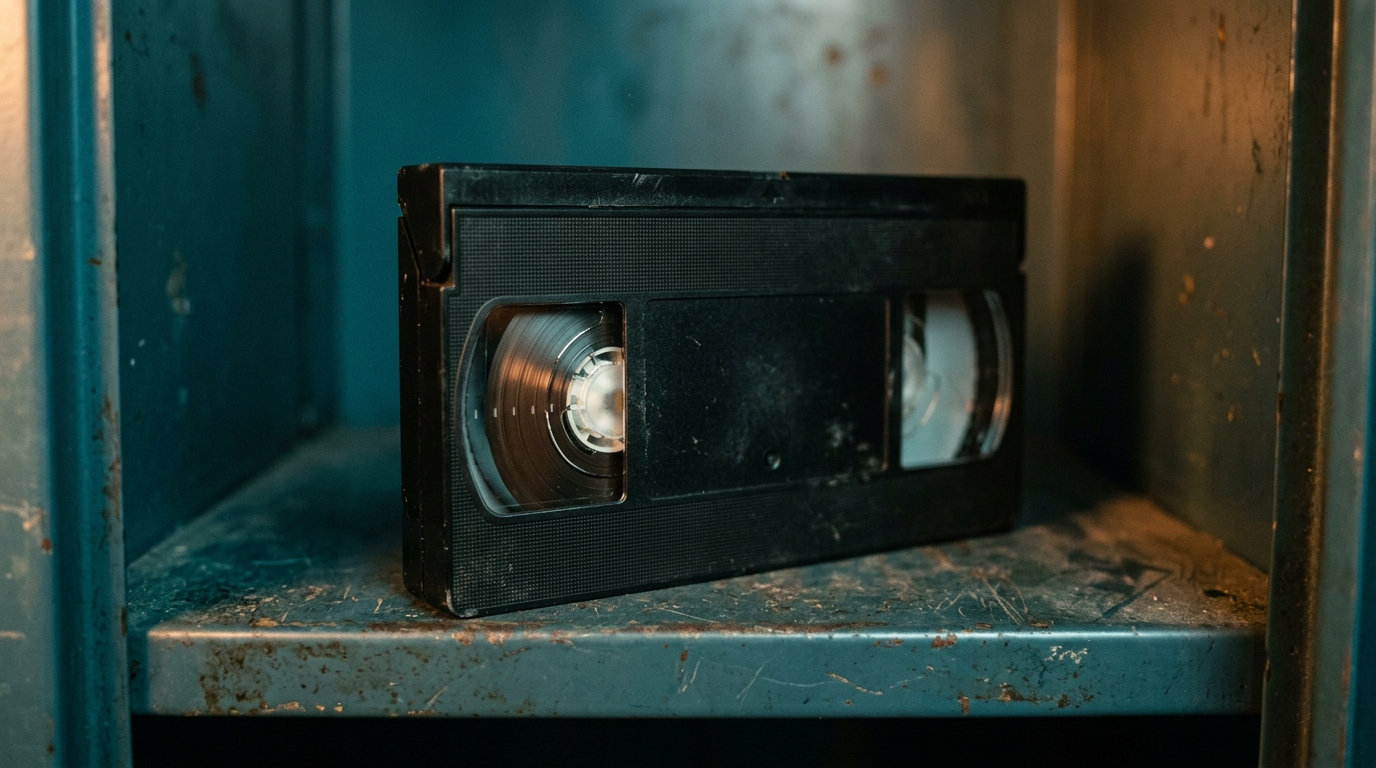
Yes, old tapes go bad. Magnetic tape decays steadily over time, losing its recorded signal and breaking down physically. If you have a box of VHS tapes recorded decades ago, they are already past their prime, and every year in storage causes quiet chemical changes inside the cassette.
That black plastic shell may look sturdy, but the ribbon inside is fragile. Understanding how tapes fail, what warning signs to look for, and how to protect what remains will help you save those family memories before they disappear.
How time affects magnetic tape
A VHS tape consists of a thin plastic ribbon coated with microscopic magnetic particles, usually iron oxide. A layer of glue called a binder holds these particles to the plastic base. When a camcorder recorded your family, it used an electromagnet to arrange those tiny particles into patterns that represent sound and picture.
Over the years, those magnetic particles lose their charge in a process known as remanence decay. As the charge weakens, a VCR struggles to read the signal. The audio often fades first, sounding muffled or hollow. Then the video signal weakens, leading to washed out color, fuzziness, and white horizontal static lines across the screen. Eventually, the signal drops out completely, leaving only blank static.
The physical warning signs of decay
Remanence decay happens invisibly, but physical breakdown leaves clear visual clues. Before you push an old cassette into a player, inspect the tape through its clear windows.
Mold and mildew
Basements, attics, and garages experience shifts in humidity that encourage mold growth. Mold feeds on the organic components inside the binder. If you see white, dusty, or spiderweb-like patches along the edges of the tape spool, the tape has mold. Do not place a moldy tape into a player. The spinning video heads will scrape the mold off, contaminating the player and destroying the tape ribbon in seconds.
Warping and loose winding
Extreme temperatures cause the thin plastic ribbon to stretch or wrinkle. When you examine the spool through the cassette window, the tape should look smooth and tightly wound. If you notice ripples, waves, or slack ribbons looping loosely around the reels, the tape has warped. Warped tape cannot track smoothly across the video heads and easily snags or tears.

What is sticky shed syndrome?
If you play an old tape and hear a high-pitched squealing sound, or if the tape suddenly jams and stops, you are likely dealing with sticky shed syndrome. This condition occurs when the binder absorbs moisture from humid air and breaks down into a sticky, gummy residue.
As the tape pulls across the internal metal heads of the player, the sticky binder scrapes off the plastic base, taking the magnetic particles with it. Once those particles peel away, the recorded picture and sound are gone permanently. Professional preservation labs can sometimes treat this condition by carefully warming the tape in a controlled oven to remove moisture temporarily for a single transfer, but home players will only ruin the ribbon.
Do camcorder tapes degrade faster than standard VHS?
Many family moments were filmed on smaller camcorder formats rather than full-sized VHS cassettes. Formats like VHS-C, Video8, Hi8, and MiniDV packed video onto much thinner, narrower ribbons.
Because camcorder tapes are smaller, their magnetic tracks sit much closer together. Even tiny amounts of physical wear, a minor wrinkle, or a speck of dust can cause major playback problems. On a standard VHS tape, a dust speck might cause a brief flash of static. On a MiniDV tape, that same speck can cause dropped frames, mosaic digital artifacts, or complete blue screens. Even though MiniDV stores digital data, the physical ribbon suffers from the same binder decay and moisture damage as older analog tapes.
What happens to older 8mm and Super 8 film reels?
Families with recordings from earlier decades often have celluloid film reels instead of magnetic tape. Real film does not use magnetic particles, so it does not lose its picture through remanence decay. Celluloid, however, faces two major threats of its own.
- Color fading: The organic dyes used in color film fade unevenly over the decades. Cyan and yellow dyes tend to deteriorate faster than magenta, which is why older uncorrected home movies often look purplish or pink.
- Vinegar syndrome: Cellulose acetate film breaks down chemically when exposed to heat and moisture. As the base decays, it releases acetic acid, producing a sharp, unmistakable smell of vinegar. This breakdown causes the film to shrink, buckle, and turn brittle. Once it starts, the chemical reaction accelerates and can ruin the entire reel.
How to store old tapes right now
If you cannot digitize your media immediately, better storage buys you valuable time.
- Move tapes out of attics, garages, and damp basements. Keep them in a climate-controlled room inside your main living area, such as a closet shelf away from exterior walls.
- Store cassettes upright like books on a library shelf. Stacking tapes flat on top of one another exerts uneven pressure on the internal spools, which encourages edge warping.
- Keep tapes in their plastic slipcases or protective cases to block household dust and pet hair.
- Keep them away from strong magnetic fields, including large speakers, heavy power transformers, and older televisions.
For a deeper look at proper preservation methods, read our guide on how to store old VHS tapes.
Preserving the memories before the footage fades
No physical tape or film lasts indefinitely. Learning how to convert VHS to digital is the most reliable way to halt ongoing deterioration. Once digitized, your family recordings no longer rely on fragile plastic ribbons, slipping rubber belts, or aging players.
Digitizing your tapes solves the storage problem, but raw footage can still be challenging to watch. Camcorder tapes often contain hours of unedited clips: shaky pans of scenery, long pauses, and unfocused moments between the milestones. Linof helps you bring those long-forgotten scenes back to life by selecting the best photos and video clips to craft a polished short film set to music, and the first animation is free.
If you are planning an event for a loved one, such as a milestone anniversary, turning preserved clips into a wedding anniversary film gives the whole room a reason to gather around the screen. Digitizing the tapes is the first step; turning that footage into something your family will gladly watch together ensures those stories survive for the years ahead.
Questions
How long do VHS tapes last before degrading?
VHS tapes generally last between 10 and 25 years before noticeable signal degradation begins, depending on storage conditions and manufacturing quality. Because most home recordings are now older than that, they are already experiencing gradual signal loss, fading color, and physical wear.
Can you play a moldy VHS tape in a standard VCR?
No, you should never insert a moldy tape into a VCR. The spinning video heads will scrape the mold off the ribbon, ruining the footage instantly and spreading mold spores throughout the machine to damage future tapes.
Can damaged or degraded tapes be restored after digitizing?
Digital capture cards can transfer only the signal that remains on the physical ribbon, so missing magnetic information cannot be brought back. However, once digitized, video software can correct shifted colors, adjust contrast, and reduce background hum from aging audio.
Written by
Dan Warner