The first photographs ever taken, and what they show
The very first photograph was made on a pewter plate in the 1820s, showing a quiet courtyard. Here is how early inventors captured rooftops, boots, and family faces.
Yarden Cohen · 1 October 2026 · 5 min read
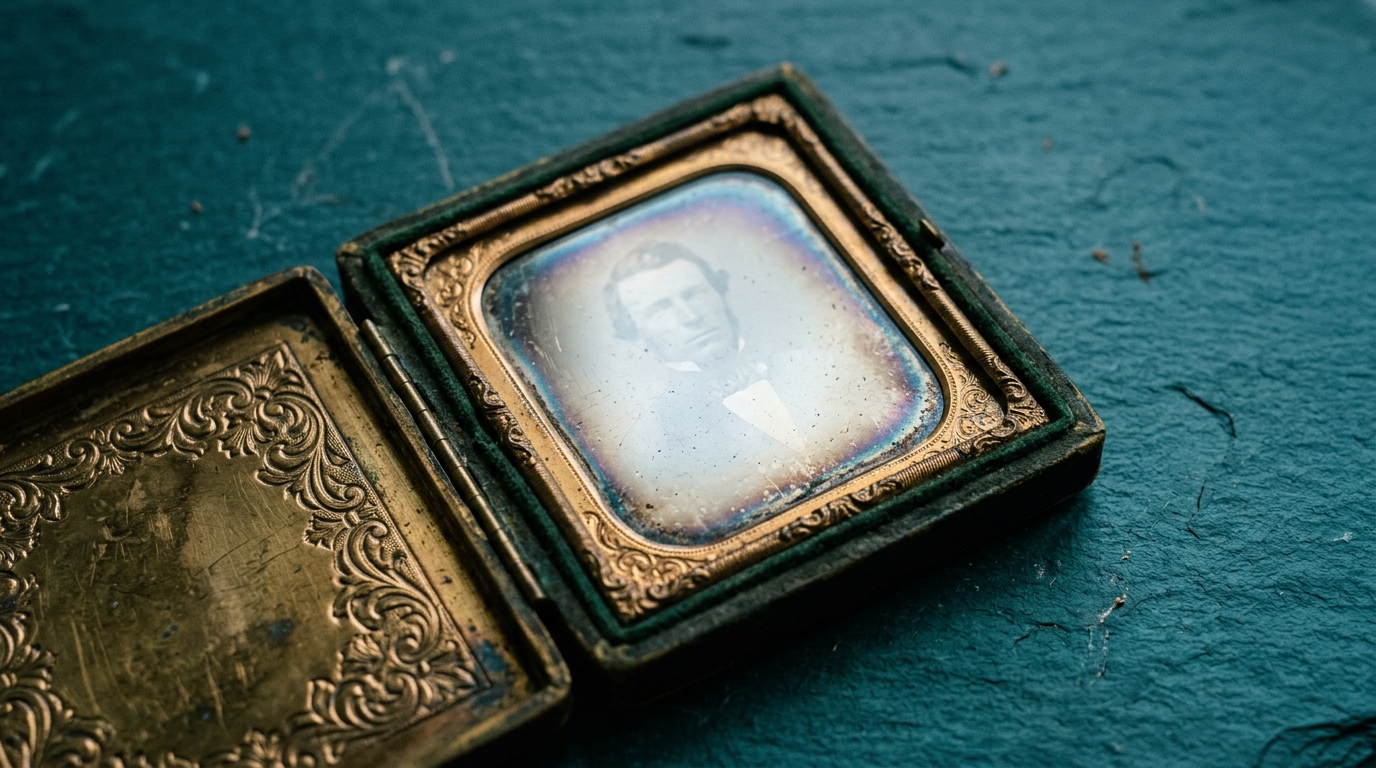
The first photograph ever taken was captured around 1826 by a French inventor named Joseph Nicephore Niepce. It shows the view from an upstairs window at his family estate in Burgundy: an open courtyard, a sloped roof, and a stone pigeon house. Because Niepce needed the sun to bake his chemical plate, the exposure took most of an entire day, leaving sunlight resting on both sides of the courtyard at once.
Today, anyone with a phone takes a dozen photos before breakfast. But knowing how the very first pictures came into the world changes how you look at the old prints tucked away in your own drawers. Every historic image required patience, chemistry, and someone deciding that a ordinary moment deserved to last.
The view from the window at Le Gras
Niepce created his rooftop image using a process he called heliography, or sun writing. He took a polished pewter plate, coated it with bitumen of Judea, a light sensitive asphalt, and set it inside a camera obscura pointed out the window.
Over many hours of daylight, the brighter parts of the scene hardened the bitumen. When Niepce rinsed the metal plate with lavender oil and white petroleum, the unhardened asphalt washed clean away, leaving behind a fixed picture in pale hardened resin against dark metal.
For nearly a century, historians considered this original plate lost. It sat forgotten in an English trunk until 1952, when researcher Helmut Gernsheim tracked it down. Today, that original sheet of pewter rests in a sealed, oxygen-free case at the University of Texas at Austin. It is the earliest surviving record of the physical world caught directly by sunlight.
The first human ever photographed
Niepce proved that camera images could be preserved, but his long exposure time meant living creatures were impossible to capture. People walked past, birds flew by, and trees swayed in the wind, leaving no mark on the plate.
In 1838, his former partner Louis Daguerre found a way to cut exposure times down to minutes using silver-plated copper treated with iodine fumes. Daguerre pointed his camera out his Parisian studio window toward the Boulevard du Temple. On that spring morning, carriages and pedestrians filled the avenue, yet Daguerre's resulting silver plate looks like a ghost town.
Because the exposure lasted around ten minutes, moving traffic passed by too quickly to leave an imprint. Down in the lower left corner, however, one man paused on the sidewalk to have his boots polished. The bootblack worked steadily, and the customer stood still enough for his silhouette to burn into the silver. That unknown man, simply tending to his shoes on a morning walk, became the first person ever captured on photographic film.
The first self-portrait and the stiff pose
Within a year of Daguerre's announcement, curious experimenters across the globe built their own cameras. In October 1839, a young chemist named Robert Cornelius set up a lens outside his family's lamp shop in Philadelphia.
Cornelius removed the lens cap, sprinted into the frame, and held rigid stillness for roughly a minute before darting back to replace the cover. His self-portrait shows a windswept young man staring earnestly at the glass. On the cardboard backing, he wrote: "The first light picture ever taken."
Sitting for a portrait in those opening years was hard work. Subjects had to sit in bright sunlight without blinking or speaking, often held in place by an iron neck brace concealed behind their chairs. This uncomfortable setup is one clear reason why nobody smiled in old photos, since holding a genuine smile for a full minute causes facial muscles to shake.
The first color photograph
Early pictures recorded light in shades of gray. While artists sometimes hand-tinted metal plates with fine camel-hair brushes, the camera could not register actual color.
That limitation changed in 1861, when Scottish scientist James Clerk Maxwell teamed up with photographer Thomas Sutton. Their subject was a bright tartan ribbon. Sutton took three separate monochrome plates through three glass filters: red, green, and blue. When the three exposures were projected back together through those same colored filters onto a wall, the overlapping lights re-created the plaid pattern.
Three-color projection was cumbersome, but it revealed the principle behind all modern color imaging. Over the decades that followed, chemical improvements fueled the evolution of the family photo, eventually trading rigid studio poses for informal everyday color snapshots.
How to date old photos in your family collection
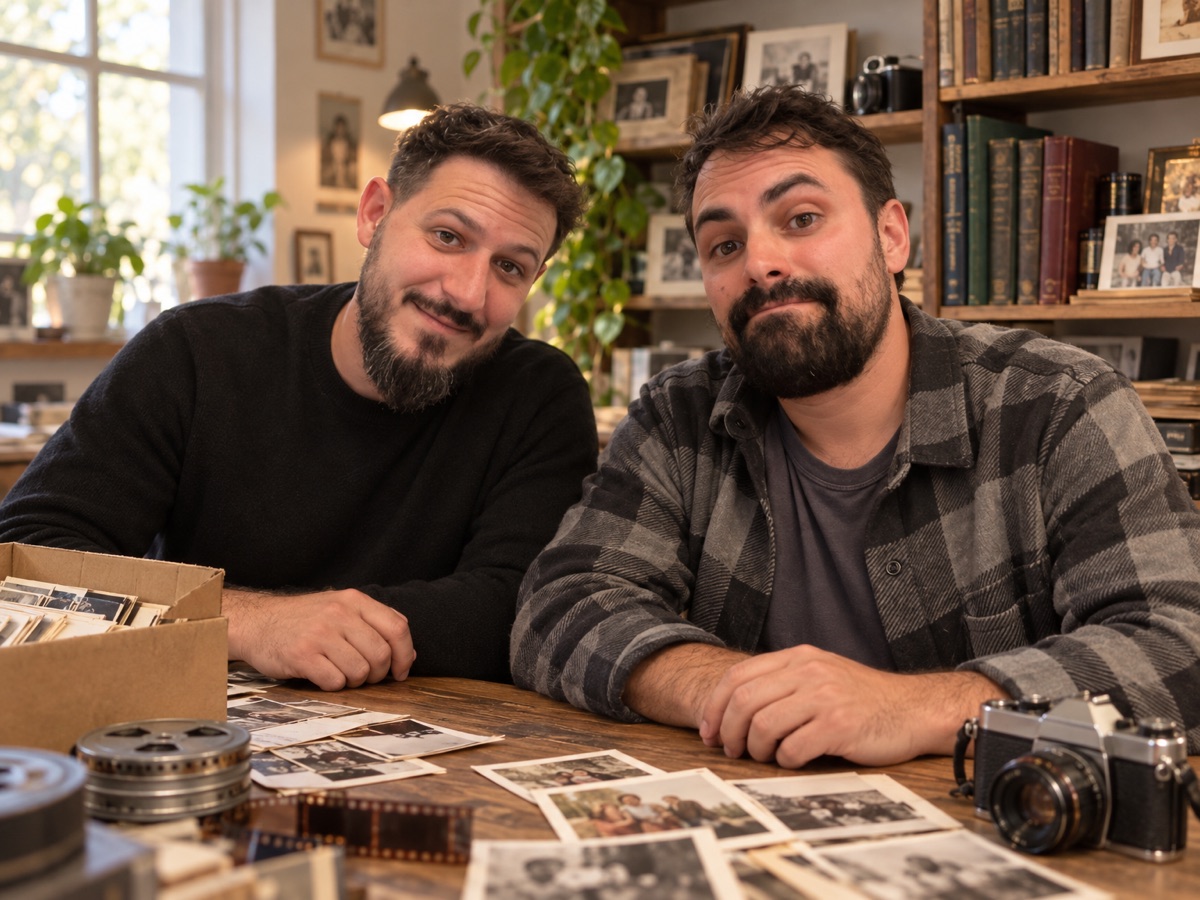
Most family boxes do not hold metal plates from the 1830s. Instead, they contain cabinet cards, tintypes, and paper prints from the late nineteenth and early twentieth centuries. If you inherit an unlabelled box, you can usually place the era by examining physical clues.
- Look at the base material. A thin metal sheet that sticks to a magnet is a tintype, common from the 1860s through the 1880s. A photograph glued onto heavy cardboard is usually a carte de visite or a cabinet card.
- Check the cardboard mount. Photographers in the 1870s often used thin cardstock with square corners. By the 1890s, studios preferred thick, dark cardboard with scalloped edges and gold embossed logos.
- Examine clothing and hair. High starched collars and corseted waists point to the Victorian era. Dropped waistlines and bobbed hair firmly belong to the 1920s.
- Search the background. Early electrical wiring, telephone poles, car fenders, or steam radiator styles will quickly narrow down a decade.
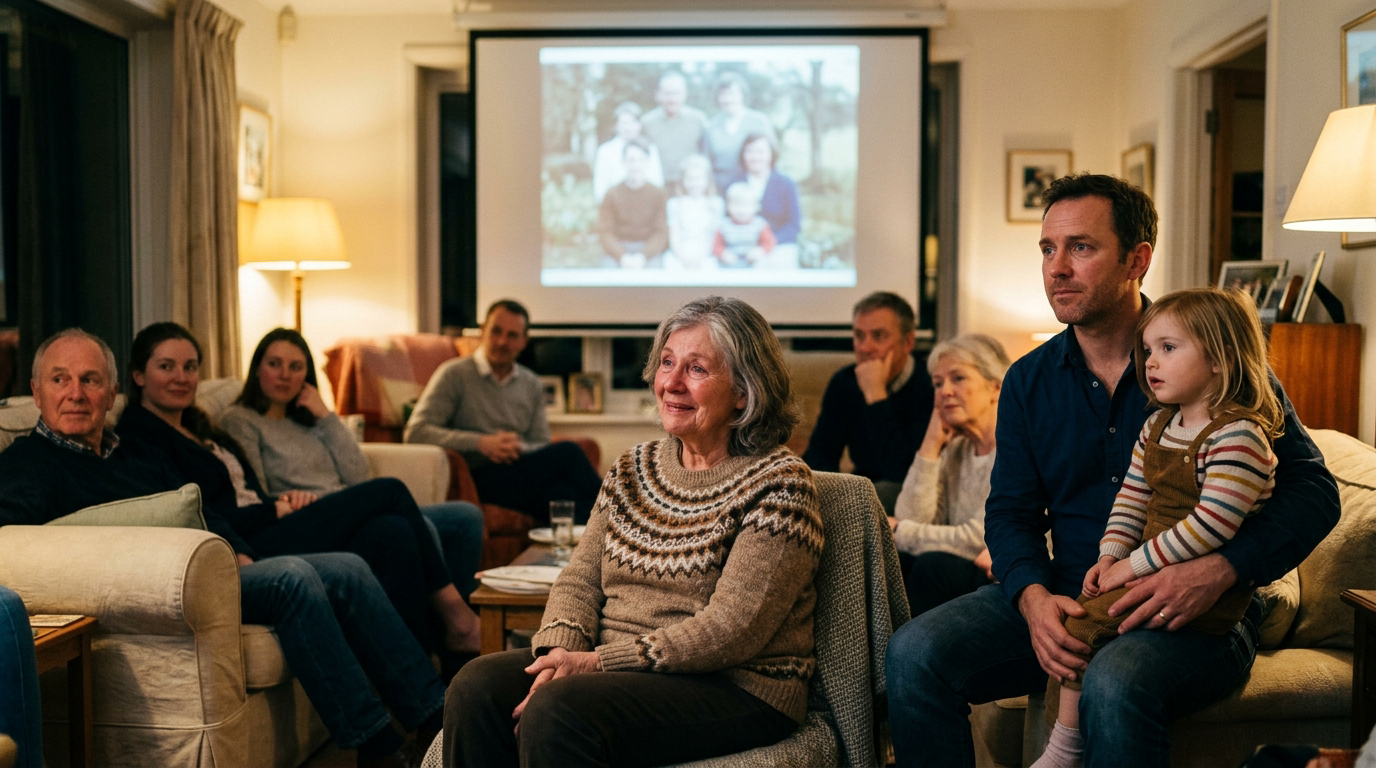
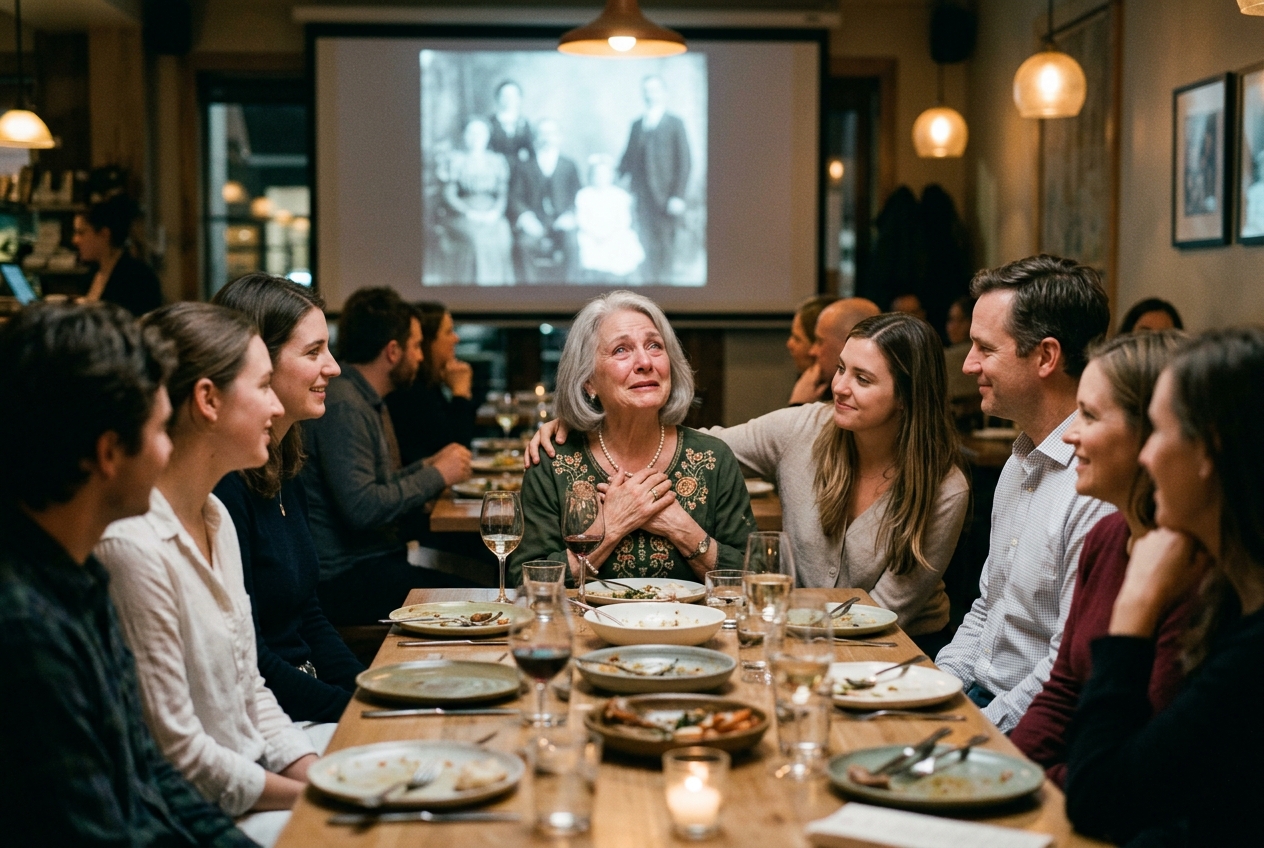
If you want to use these discoveries for a family event, such as a milestone anniversary or a memorial gathering, selecting two dozen clear pictures across different eras tells a vivid story. You can follow our guide on choosing photos and videos to build a clear timeline that guests will follow easily.
When you are ready to bring those heritage prints into an anniversary or birthday celebration, Linof can turn your scanned images into a short, polished family film set to music, with restored colors and subtle movement, and your first animation is free.
Keeping your original prints safe
Old photographs are fragile chemical layers bonded to paper, glass, or metal. They degrade when exposed to heat, humidity, and direct sunlight. To ensure your earliest family heirlooms survive for the next generation, follow three basic rules:
- Keep them dry and cool: Store old albums in an interior closet on a living floor, never in an uninsulated attic or damp basement.
- Use acid-free paper: Replace standard cardboard boxes and magnetic adhesive photo albums with archival, acid-free sleeves.
- Digitize early: Scan paper prints at high resolution so you have a digital backup if the original paper continues to yellow.
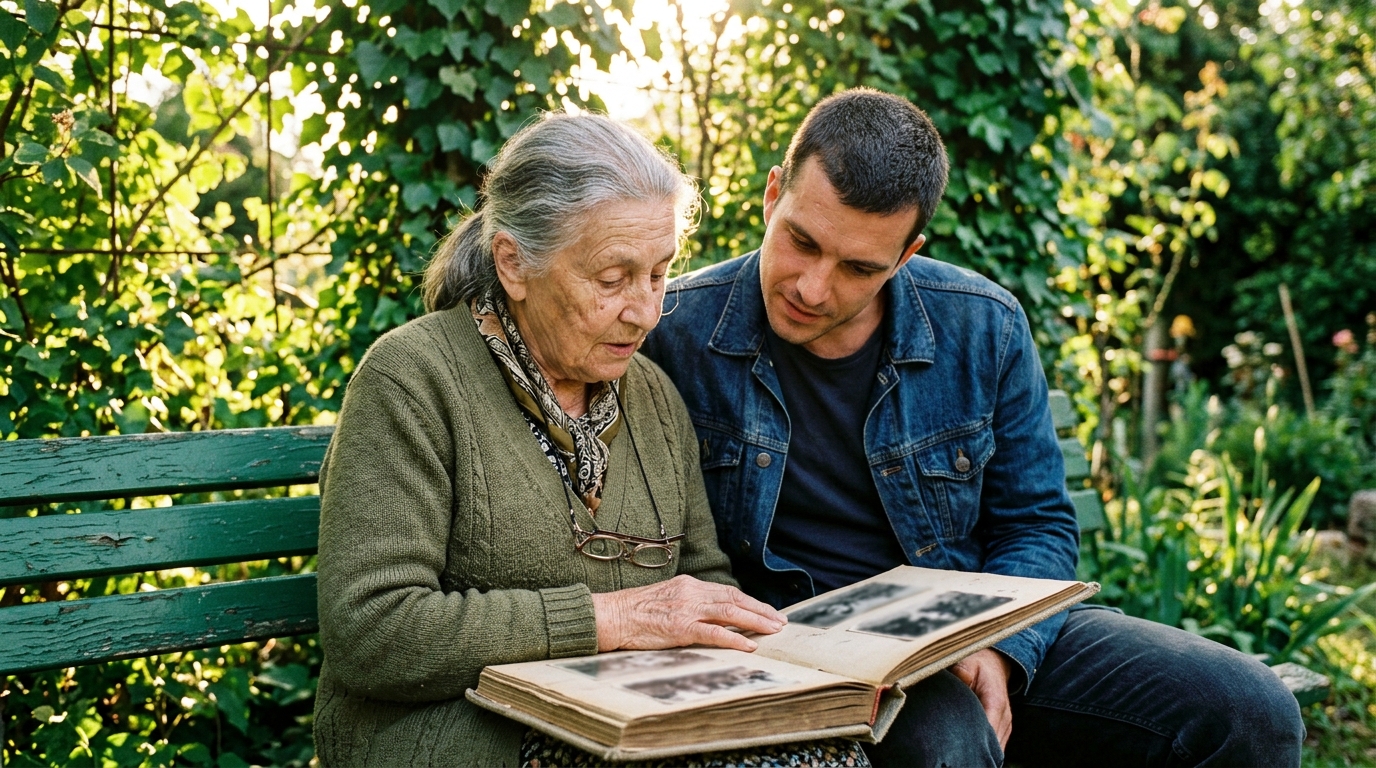
Every snapshot in your closet exists because an ancestor took the time to frame a moment and save it. By preserving those prints and sharing their stories, you keep their quiet history alive.
Questions
What is the oldest surviving photograph in the world?
The oldest surviving photograph is View from the Window at Le Gras, made by Joseph Nicephore Niepce around 1826. It is an image of his family estate in France, preserved on a bitumen-coated pewter plate.
Who was the first person ever captured in a photograph?
The first photographed person was an unnamed man getting his boots polished in Paris in 1838. He was captured by Louis Daguerre on the Boulevard du Temple because he stood still during the ten-minute exposure.
How can I tell what year an old family photo was taken?
Examine the physical material first, distinguishing between tintypes, cardboard cabinet cards, and modern paper. Then inspect clothing styles, hairstyles, and background details like vehicles or light fixtures to identify the correct decade.
Written by
Yarden Cohen