A short history of the family photo album
From Victorian parlor cards to brittle black paper and sticky magnetic sheets, how we bound our photographs shaped how we remember family life.
Yarden Cohen · 1 October 2026 · 4 min read

The family photo album began in the nineteenth century as a simple necessity. Before families had cameras, they suddenly had access to inexpensive portrait cards that needed a safe home. How we bound those images over the decades tells us just as much about our ancestors as the portraits themselves.
The Victorian craze that started the album
In the 1850s, portrait photographers developed a method to produce multiple identical small portraits on glass plates. These small paper prints were mounted on rigid cardboard cards called cartes de visite, or visiting cards. People collected portraits of cousins, grandparents, and public figures, trading them during afternoon social calls.
Because these cards shared a standard size, bookbinders designed heavy books with pre-cut rectangular window slots. You slipped the card into the slot without glue or paste.
These Victorian albums featured thick cardboard leaves, brass clasps, and tooled leather bindings. Families kept them on parlor tables for visitors to flip through. In many ways, they served as the living room social feed of their era, curating family identity for guests.
Candid snapshots and the black paper era
By the early twentieth century, portable cameras changed everything. Photography left the stiff studio environment. Everyday people began taking informal snapshots of garden parties, bicycles, pets, and children playing on front lawns.
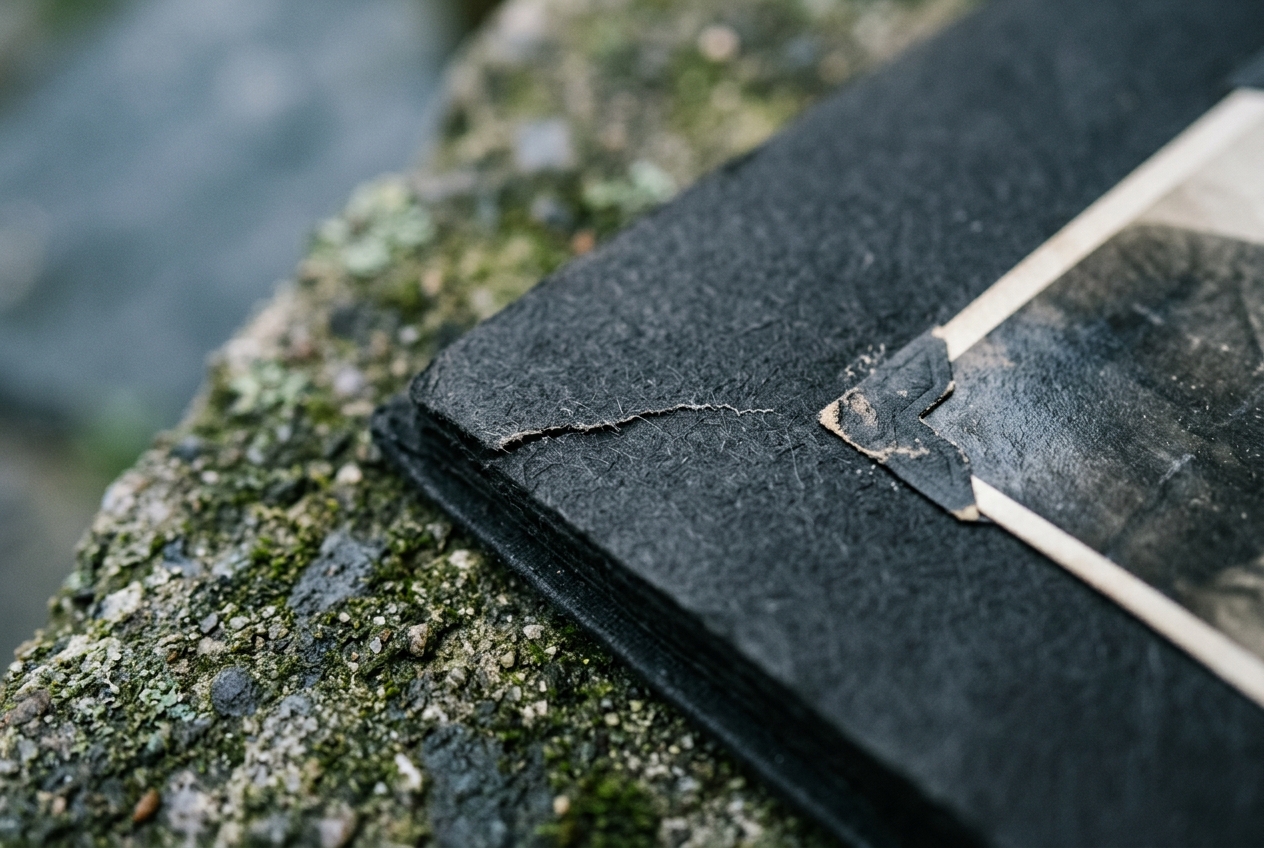
Pre-cut card slots could not hold odd-sized candid snapshots. This sparked the rise of the classic black paper album, which remained common from the 1920s into the 1950s. These albums featured soft, dark paper pages bound by a simple cord threaded through holes in the margin.
Families secured black and white prints using small triangular photo corners that adhered to the sheet, leaving the back of the print clean. People frequently labeled snapshots directly on the dark pages using white ink or pencil. For families documenting their roots across generations, learning how to write family history often starts with transcribing those exact handwritten captions.
These black paper albums are often fragile today. The acid in the wood pulp causes the paper to dry out, making the borders chip or crumble when pages turn too quickly.
The magnetic album and sticky sheets
The 1970s introduced what seemed like an effortless solution: the self-adhesive magnetic album. Despite the name, these books contained no magnets. Instead, each page consisted of corrugated card covered in tacky adhesive strips, sealed under a peel-back sheet of clear plastic.
You peeled back the plastic, positioned prints on the adhesive, and smoothed the cover back down. The design became an everyday household staple through the 1980s and 1990s.
Unfortunately, these albums pose major risks to physical photographs. The glue contains acidic compounds that soak into the back of the print over decades. The plastic coverings, often made of polyvinyl chloride, release gases that cause color pictures to fade or shift toward orange and yellow. Anyone opening an album from forty years ago will often notice sticky lines bonded to the photo backs and a sharp, vinegary smell.
Freeing stuck photos safely
If you find prints bonded to sticky album sheets, do not pull them by the corners. Forcing the print bends the emulsion and tears the paper backing.
Instead, test the adhesive bond before applying pressure:
- Lay a clean, dry fingertip gently in the middle of the picture.
- Apply slight downward contact and attempt to nudge the photo a fraction of a millimeter to the side.
- If the print shifts slightly, the adhesive has dried into loose residue, and you can lift the photo gently.
- If the print will not shift, the glue has merged with the backing.
When prints remain firmly stuck, archivers use unwaxed dental floss. Wrap a length of floss securely around both hands, slide it under one edge of the print, and saw side to side with steady, gentle tension against the page surface. The floss slices through the dried glue layer without creasing the photographic paper.
Bringing old albums into modern family events
Preserving the contents of an old album usually means scanning the pages. A digital copy protects against physical wear, accidental water leaks, or misplacement. Yet loose digital scans stored in folders rarely bring relatives together the way an album on a coffee table used to do.
When a milestone approaches, like an anniversary or a parent's big birthday, an organized selection of these scanned prints can tell a cohesive life story. If you are assembling pictures for a gathering, our guide on choosing photos and videos for your film offers steps on pacing and selection. Linof turns your scanned family photos and home clips into a short film with music and animated movement, and your first animation is free. The finished film gives everyone in the room a shared way to revisit the pictures together.
Preserving albums for the future
Once your pages are digitized, keep the original physical books. A digital file records the image, but the physical album records the curator's voice. The person who chose the pictures, cropped them, arranged the sequence, and wrote the captions left behind a personal record of what mattered to them.
To preserve your albums for the next generation, follow a few basic habits:
- Store albums upright on sturdy shelves, avoiding cramped basements or hot attics.
- Keep rooms temperate and away from direct sun exposure.
- Separate sticky pages with sheets of acid-free glassine paper if prints cannot yet be removed.
- Handle older black paper pages by the spine margins rather than outer edges to avoid flaking.
Taking an afternoon to leaf through an older relative's album helps bridge decades. The physical books may age, but the connections they preserve remain as meaningful as when the first card was slotted into place.
Questions
Why do old magnetic photo album pages ruin photographs?
The adhesive coating on magnetic album pages is highly acidic, which breaks down photographic paper over time. The clear plastic cover sheets also release harmful gases that discolor prints and make paper brittle.
How do you safely remove photos stuck to an old album page?
Do not peel stuck photos from the corners, which tears the paper. Slide a piece of thin, unwaxed dental floss underneath the print and saw gently back and forth to separate the adhesive bond without bending the picture.
What is the best way to store vintage black paper photo albums?
Keep vintage black paper albums flat or supported upright in a cool, dry living area away from direct sunlight. Avoid storing them in damp basements or hot attics, and turn the pages carefully to prevent brittle edges from flaking.
Written by
Yarden Cohen